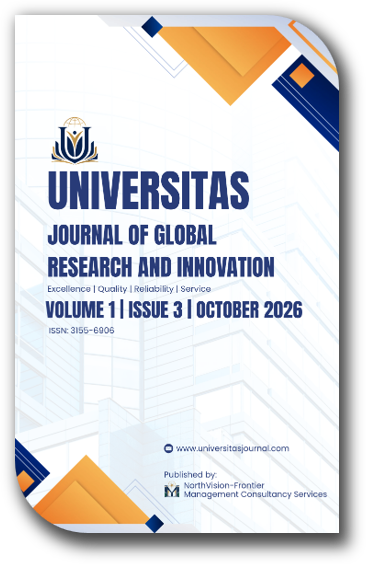
Assessment and Evaluation Study of Railway Engineering Education in the Philippines using a Triple Helix-Based Framework Composite Index Approach
DOI:
https://doi.org/10.5281/zenodo.23535998Keywords:
railway engineering education, Triple Helix Model, Analytic Hierarchy Process, composite index, higher education institutions, curriculum evaluation, Philippines, engineering workforce developmentAbstract
Rapid modernization of the Philippine railway network demands a highly skilled domestic engineering workforce, yet higher education institutions lack standardized quantitative metrics to evaluate how academic programs align with industry needs and government policies. This study assessed and evaluated the state of railway engineering education in the Philippines using a Triple Helix-based composite index approach that integrates the academic, government, and industry dimensions of an innovation ecosystem. Specifically, the investigation sought to determine the relative importance of ten Triple Helix capacity indicators and to measure the institutional performance of partner universities offering railway-related programs in Metro Manila. Using a quantitative descriptive-evaluative research design, the Analytic Hierarchy Process was employed to derive indicator weights from pairwise comparisons completed by forty-two expert respondents drawn from the academic, government, and industry sectors. Expert judgments were aggregated through the geometric mean method, validated using consistency ratios, and combined with MinMax normalized institutional data and General Appropriations Act funding records to compute composite index scores. Results revealed that the academic dimension carried the highest priority weight at 72.24%, followed by the government dimension at 19.03% and the industry dimension at 8.73%, with all comparison matrices satisfying the consistency threshold below 0.10. Globally, specialized railway engineering courses emerged as the single most critical indicator at 33.56%, followed by faculty lecturers at 15.71% and student enrollment and graduates at 14.48%. Composite index scores ranked the Polytechnic University of the Philippines first at 0.8433, FEATI University second at 0.6928, and the Technological Institute of the Philippines third at 0.2218, confirming that a specialized railway curriculum supported by qualified faculty, government partnerships, and sustained industry linkages drives institutional readiness.
Downloads
References
Andig, J., & Canencia, O. P. (2020). Employability skills, competencies and relevant programs in engineering technology graduates: A case of Mindanao State University System, Philippines. American Journal of Educational Research, 8(12), 926–937. https://doi.org/10.12691/education-8-12-6
Armarego, J., & Roy, G. G. (2012, July 1–4). A modelling framework for curriculum assessment for professional accreditation [Paper presentation]. 8th International CDIO Conference, Queensland University of Technology, Brisbane, QLD, Australia.
Asaff, Y., Grubisic, V., Scalice, R., & Dias, A. (2015). The resurgence of education in railway and metro engineering in Brazil. Social Sciences, 4(3), 806–819. https://doi.org/
10.3390/socsci4030806
Bajpai, S., & Kidwai, N. R. (2018). Government's effort in control engineering education in India. Comparative Professional Pedagogy, 8(1), 75–83. https://doi.org/10.2478/rpp2018-0010
Becker, G. S. (1964). Human capital: A theoretical and empirical analysis, with special reference to education. National Bureau of Economic Research.
Biggs, J. (1996). Enhancing teaching through constructive alignment. Higher Education, 32(3), 347–364. https://doi.org/10.1007/BF00138871
Brodny, J. (2025). Assessing the level of innovation of the European Union countries using the Triple Helix concept and a new Balanced Composite Index Method. Journal of Open Innovation: Technology, Market, and Complexity, 11(1), 100450.
Cvetković, N., Vrhovac, V., Morača, S., & Graić, I. (2017, February 22–24). Triple helix model in higher education [Paper presentation]. XXIII Skup TRENDOVI RAZVOJA: "Položaj visokog obrazovanja i nauke u Srbiji", Zlatibor, Serbia. http://www.trend.uns.ac.rs/ stskup/trend_2017/radovi/T3.3/T3.3-5.pdf
Dela Cruz, R. C. (2022, July 14). New courses to develop railway industry: LRMC. Philippine News Agency. https://www.pna.gov.ph/articles/1178968
Department of Budget and Management. (2026). Republic Act No. 12314: General Appropriations Act, Fiscal Year 2026 (Vol. I-A, State Universities and Colleges – NCR, pp. 504–511). Official Gazette of the Republic of the Philippines, 122(1).
Department of Transportation. (2023). Greater Capital Region railway system: Operating lines by 2030. Republic of the Philippines Department of Transportation.
Etzkowitz, H. (2013). Anatomy of the entrepreneurial university and the Triple Helix model of innovation. Social Science Information, 52(4), 486–511.
Etzkowitz, H., & Leydesdorff, L. (1995). The Triple Helix—University-industry-government relations: A laboratory for knowledge based economic development. EASST Review, 14(1), 14–19.
Faustino, G. M. A., Gabasa, M. L. G., & De Jesus, L. (2025). Systematic literature review on skill mismatch: Bridging the gap through educational leadership and industry collaboration. International Journal of Research and Innovation in Social Science, 9(5),
5151–5169. https://doi.org/10.47772/ijriss.2025.905000400
FEATI University. (n.d.). Department of Railway Engineering. https://www.featiu.edu.ph/ dept_railway-php/
Fomunyam, K. G. (2020). The implications of funding on enrolment rates of international postgraduate students: The case of engineering students. International Journal of Engineering Research and Technology, 13(7), 1567–1574. https://doi.org/10.37624/ ijert/13.7.2020.1567-1574
Imansari, N., & Sutadji, E. (2017). A conceptual framework curriculum evaluation electrical engineering education. International Journal of Evaluation and Research in Education, 6(4), 265–271. https://doi.org/10.11591/ijere.v6i4.7624
Japan International Cooperation Agency. (2023, August 23). Why a 30-year railway master plan makes sense for PH now. https://www.jica.go.jp/english/overseas/philippine/ information/press/2023/1516722_16864.html
Kaewunruen, S. (2017). Underpinning systems thinking in railway engineering education. Australasian Journal of Engineering Education, 22(2), 107–116. https://doi.org/
10.1080/22054952.2018.1440481
Khinnithuck, S., Huang, F., & Phonethana, S. (2026). Technological transfer and vocational education: The role of the China-Laos Railway in enhancing technical skills in Lao PDR. American Journal of Multidisciplinary Research and Innovation, 5(1), 1–8. https:// doi.org/10.54536/ajmri.v5i1.5235
Khoo, K. L., Sidhu, S. K., Goh, S. K., & Dastane, O. (2026). Bridging research, industry, and qualification frameworks in marketing education: A multi-study investigation. The
International Journal of Management Education, 24(2), 101392. https://doi.org/
10.1016/j.ijme.2026.101392
Kuusinen, K., & Albertsen, S. (2019). Modeling the industry-academia gap in software engineering education with the technical support/collaboration model. 2019 IEEE/ACM 41st International Conference on Software Engineering: Software Engineering Education and Training (ICSE-SEET), 12–22. https://doi.org/10.1109/ICSESEET.2019.00011
Lautala, P., & Dick, C. T. (2017). Railway Engineering Education Symposium. Transportation Research Record: Journal of the Transportation Research Board, 2608(1), 96–104. https://doi.org/10.3141/2608-11
Li, H., & Tang, Y. (2012). Research on personnel training model of Urban Rail Transit (URT) information management major under instruction of CDIO. Energy Procedia, 16(Part B), 1300–1304. https://doi.org/10.1016/j.egypro.2012.01.208
Light Rail Manila Corporation. (2022, July 14). LRMC commits to advance railway education through Ateneo partnership. https://lrmc.ph/2022/07/14/lrmc-commits-to-advancerailway-education-through-ateneo-partnership/
Mead, P. F., & Bennett, M. M. (2009). Practical framework for Bloom's based teaching and assessment of engineering outcomes. Education and Training in Optics and Photonics, ETB3. https://doi.org/10.1364/etop.2009.etb3
Nhat, N. M., & Hoang, N. K. (2025). Driving sustainable transport infrastructure in urban regions of developing markets: Leveraging private sector involvement. International
Journal of Sustainable Development and Planning, 20(10), 3845–3856. https://doi.org/
10.18280/ijsdp.201018
OECD. (2018). Enhancing connectivity through transport infrastructure: The role of official development finance and private investment. OECD Publishing. https://doi.org/
10.1787/9789264304505-en
Onwuka, E. N. (2009). Rescuing engineering education in Nigeria. International Journal of Electrical and Telecommunications Engineering, 2(2), 20–25.
Oyebode, O. J. (2020). Revitalization of the quality engineering education in Nigeria: Special attention to funding and implementation strategies. International Journal of Construction Engineering and Planning, 6(1), 38–47. https://doi.org/10.37591/ ijcep.v6i1.662
Pateña, A. J. (2018, March 2). PH Railway Institute to ensure efficient railway system. Philippine News Agency. https://www.pna.gov.ph/articles/1027108
Philippine Institute for Development Studies. (2024). Skills mismatch: A barrier to economic growth. Policy Pulse, 1(3), 1–4. https://www.pids.gov.ph/publication/policy-pulse/ skills-mismatch-a-barrier-to-economic-growth
Polytechnic University of the Philippines. (n.d.). Bachelor of Science in Railway Engineering Management. https://www.pup.edu.ph/ce/BSREM
Prabhu, B. V., & Kudva, S. A. (2016). Success of student internship in engineering industry.
Higher Education for the Future, 3(2), 164–182. https://doi.org/10.1177/ 2347631116650550
Purzer, S., Douglas, K. A., Folkerts, J. A., & Williams, T. V. (2017). An assessment framework for first-year introduction to engineering courses [Paper presentation]. 2017 ASEE Annual Conference & Exposition, Columbus, OH, United States. https:// peer.asee.org/27552
Railway Academy. (2025, September 27). Global careers in metro & high-speed rail: Opportunities for engineers and managers. https://railwayacademy.org/globalcareers-in-metro-and-high-speed-rail-opportunities-for-engineers-and-managers/
Reis, V., & Macário, R. (2012). Competences gap in European railways education. Transportation Research Record: Journal of the Transportation Research Board, 2275(1), 111–119. https://doi.org/10.3141/2275-13
RichestPH. (2025, April 30). Training the next generation: Addressing the skills gap in Philippine infrastructure. https://richestph.com/training-the-next-generationaddressing-the-skills-gap-in-philippine-infrastructure
Rizaludin, A. (2025). Building a collaborative ecosystem: The role of higher education institutions, industry, and government in enhancing graduates' employability. International Seminar, 7, 347–355. https://doi.org/10.36563/e8pexs76
Rizzetto, L., Malavasi, G., Ricci, S., Montaruli, N., Abbascià, N., Risica, R., Bocchetti, G., Gherardi, F., & Raffone, A. (2015). A successful cooperation between academia and industry in higher rail education: The postgraduate course in "Railway Infrastructure and Systems Engineering" at Sapienza. Social Sciences, 4(3), 646–654. https://doi.org/
10.3390/socsci4030646
Rosnelli, Ariyanto, M., & Purba, S. (2024). The role of industrial internship activities to improve digital competency of engineering students: Perception of engineering managers in industry. International Journal of Learning, Teaching and Educational Research, 23(9), 498–517. https://doi.org/10.26803/ijlter.23.9.25
Saaty, T. L. (1990). How to make a decision: The Analytic Hierarchy Process. European Journal of Operational Research, 48(1), 9–26. https://doi.org/10.1016/03772217(90)90057-I
Saaty, T. L. (1994). How to make a decision: The Analytic Hierarchy Process. Interfaces,
24(6), 19–43. https://doi.org/10.1287/inte.24.6.19
Salcedo, S., Alindahao, A. J. K., & Agonia, M. (2023). An analysis of the Philippine railway industry and the potential for land value capture [Unpublished undergraduate thesis]. University of Asia and the Pacific.
Schultz, T. W. (1961). Investment in human capital. The American Economic Review, 51(1), 1–17.
Sharma, S. K. (2020). Government funding for sustainable and green infrastructure in Indian higher education institutions: A policy–impact assessment under SDG and NEP 2020 frameworks. Iconic Research and Engineering Journals, 9(8), 120–135. https://doi.org/
10.64388/irev9i8-1714096
Tarragó, J. P., Osejos-Merino, M., Galvez, D. L. D., & Rodriguez, A. R. (2025). Educational innovation for sustainability: An interdisciplinary model of road decarbonization in higher education. Preprints. https://doi.org/10.20944/preprints202502.0760.v1
Vedhathiri, T. (2020). Research cluster in engineering education and human resource development. Journal of Engineering Education Transformations, 33(Special Issue), 1–
8. https://journaleet.in/index.php/jeet/article/view/1798/1797
Xue, Y. B., & Keat, O. B. (2025). Triple helix model and its influence on engineering innovation: A study of higher vocational students in China. Journal of Pedagogical Research, 9(1), 1–15. https://doi.org/10.33902/jpr.202535404
Yang, H. (2022). A Triple Helix model of doctoral education: A case study of an industrial doctorate. Sustainability, 14(17), 10942. https://doi.org/10.3390/su141710942
Yun, J. J., Liu, Z., & Zhao, X. (2025). The role of open innovation in the evolution of the Triple Helix: A comparative study of industrial development. Journal of Open Innovation: Technology, Market, and Complexity, 11(1), 100685. https://doi.org/10.1016/ j.joitmc.2025.100685
Zakaria, H., Kamarudin, D., Fauzi, M. A., & Wider, W. (2023). Mapping the helix model of innovation influence on education: A bibliometric review. Frontiers in Education, 8,
Downloads
Published
Issue
Section
License
Copyright (c) 2026 Meeko C. Masangcap , Kenneth Bryan M. Tana (Author)

This work is licensed under a Creative Commons Attribution 4.0 International License.