Current Issue

Vol. 1 No. 4 (2026): November Issue
					View Vol. 1 No. 4 (2026): November Issue

Our November Issue brings together multidisciplinary research and sustainable ideas that address real-world challenges. By connecting diverse fields of knowledge, it promotes excellence in research, encourages responsible innovation, and advances solutions for a more sustainable and inclusive future.

Published: 2026-11-06

Research Articles

  • Research Articles

    Subjective Social Status and Academic Adjustment of Freshmen College Students in a Private Higher Education Institution (PHEI)

    • Yiddish Ken Shalem C. Fermill Guidance Center, University of Luzon
    • Danielle Aira S. Lomibao Guidance Center, University of Luzon
    • Allyssa P. Ambeguia Guidance Center, University of Luzon
    • Angelo M. Navarro Guidance Center, University of Luzon
    • Raymond Albert Esguerra Guidance Center, University of Luzon
    • Maria Czarina G. Caoile Guidance Center, University of Luzon
    DOI https://doi.org/10.5281/zenodo.23998964
    Pages 1-22
    Abstract

    Students transition to higher education with varying perceptions of their social status, which may be associated with how they experience and respond to academic demands. Examining these perceptions may provide further insight into their academic adjustment. This study therefore investigated the relationship between Subjective Social Status, in terms of socioeconomic status and community social status, and academic adjustment among 124 freshmen college students at the University of Luzon, a Private Higher Education Institution (PHEI) in Dagupan City, Philippines. A quantitative descriptive-correlational research design was employed, with data collected through the MacArthur Scale of Subjective Social Status and the Academic Adjustment Scale. Descriptive statistics and Pearson's product-moment correlation were used to analyze the data. Results indicated moderate levels of perceived socioeconomic status (M = 6.09, SD = 1.45) and community social status (M = 6.12, SD = 1.50). Overall academic adjustment was high (M = 3.50, SD = 0.48), with academic motivation obtaining the highest mean (M = 3.96, SD = 0.82), followed by academic achievement (M = 3.41, SD = 0.67) and academic lifestyle (M = 3.15, SD = 0.56). A significant moderate positive relationship was found between subjective socioeconomic status and academic adjustment (r = .33, p < .001), whereas community social status showed no statistically significant association (r = .17, p = .059). This suggests that freshmen who perceive their families to have higher socioeconomic standing relative to the national ladder tend to report better academic adjustment, while immediate community social standing showed no significant association. Findings may inform institutional initiatives including time-management and routine-building workshops, as well as institutional financial advising and peer-mentorship programs.
  • Research Articles

    Real-Life Situations: Towards a Well-Managed Virtual Mathematics Class

    • Jann Clark A. Ramirez Angelo L. Loyola Senior High School
    DOI https://doi.org/10.5281/zenodo.24030236
    Pages 23-39
    Abstract

    The transition to online learning during the COVID-19 pandemic significantly transformed educational practices and underscored the need for effective pedagogical strategies in Mathematics instruction. Given the abstract nature of mathematical concepts, the integration of real-life situations has been recognized as a valuable approach for promoting meaningful learning and improving students’ conceptual understanding. This study examined the practices of Mathematics teachers in integrating real-life situations into online learning and explored how such practices contribute to strengthening pedagogy in Mathematics education. Specifically, the study investigated the lesson components in which real-life situations were incorporated, the strategies employed by teachers, the challenges encountered during implementation, and the perceived advantages of contextualized instruction. A qualitative descriptive research design utilizing documentary analysis was employed. Data were gathered from Eight-Week IDEA Lesson Exemplars, learning activities, seatworks, and assessment materials prepared by Mathematics teachers during the first quarter of School Year 2021–2022. The collected documents were analyzed using thematic content analysis involving coding, categorization, and theme development. Findings revealed that real-life situations were most frequently integrated in the Development phase, particularly in the “What Is It” section, followed by the “What I Can Do” and “What’s More” sections. Integration was most evident in lessons involving functions and their applications. Challenges were observed in contextualizing highly abstract topics and competencies with limited real-world applicability. Despite these challenges, the use of real-life situations enhanced logical thinking, problem-solving skills, learner engagement, creativity, and conceptual understanding. The study concludes that contextualized instruction remains an effective strategy for strengthening Mathematics pedagogy in online learning environments and supports the development of meaningful and learner-centered learning experiences.

  • Research Articles

    Dimensions Underlying Student Preferences in Science Education: An Exploratory Factor Analysis

    • John Rovic A. Borbe Science Department, College of Education, Rizal Technological University, Philippines
    • Angieline D. Destar Science Department, College of Education, Rizal Technological University, Philippines
    • Bea Jenn Getalado Science Department, College of Education, Rizal Technological University, Philippines
    • Alexis G. Pica Science Department, College of Education, Rizal Technological University, Philippines
    • Arra R. Salapate Science Department, College of Education, Rizal Technological University, Philippines
    • Rizaldy E. Garcia Science Department, College of Education, Rizal Technological University, Philippines
    DOI https://doi.org/10.5281/zenodo.24030427
    Pages 40-62
    Abstract

    Amid low enrollment rates in science education programs at Rizal Technological University, understanding the motivational drivers behind students’ choices became a critical concern. This study aimed to develop and validate a scale to measure students' motivations for selecting Science Education as a career path, particularly within the teacher education programs. Grounded in qualitative thematic analysis of interviews with preservice science education students, an initial item pool was generated, capturing themes such as intrinsic passion, cognitive value, familial influence, and social encouragement. Using Exploratory Factor Analysis (EFA), a three-factor structure emerged, Intrinsic and Familial Motivation for Teaching Science, Cognitive-Value Orientation Toward Science and Teaching, and Social Influences and Teacher-Inspired Motivation, explaining 57.5% of the variance. Reliability analysis yielded high internal consistency (Cronbach’s alpha = 0.942; McDonald’s omega = 0.946), indicating a robust scale. This validated instrument provides a context-specific tool for understanding student motivation, offering actionable insights for improving recruitment, retention, and targeted support for future science educators.

  • Research Articles

    Financial Readiness and Financial Management Practices of Hospitality Management Students at Eastern Samar State University-Maydolong Campus

    • Gerwin A. Guarino Eastern Samar State University – Maydolong
    DOI https://doi.org/10.5281/zenodo.24038529
    Abstract

    Managing limited financial resources requires college students to make informed decisions about essential needs, discretionary spending, and savings. However, financial knowledge does not always translate into consistent financial practices, and evidence concerning Hospitality Management students remains limited. This study determined the financial readiness and financial management practices of Bachelor of Science in Hospitality Management students at Eastern Samar State University–Maydolong Campus and examined their relationship and differences according to sex and year level. A quantitative, cross-sectional descriptive-correlational design was employed. Using stratified random sampling, data were gathered from 244 students through a structured questionnaire adapted and modified from an existing instrument. The questionnaire measured financial readiness through general financial knowledge and self-reported needs-and-wants decision practices, and financial management through budgeting, prioritizing essential expenses, saving, and controlling unnecessary spending. Frequency, percentage, mean, and standard deviation were used for descriptive analysis; Spearman’s rank-order correlation, independent-samples t-test, and one-way analysis of variance were used for inferential analysis. Respondents reported high financial readiness, with mean scores of 3.25 for general financial knowledge and 3.14 for needs-and-wants decision practices. Financial management practices were also rated high. Prioritizing essential expenses had the highest mean (3.14), followed by controlling unnecessary spending (2.99), budgeting (2.88), and saving (2.75). Financial readiness was positively and significantly associated with financial management practices (ρ = .378, p < .001). No significant differences were found according to sex or year level. The findings indicate that higher financial readiness is associated with more frequent financial management practices, although causation cannot be inferred. A financial-readiness enhancement program for all year levels is recommended, emphasizing practical budgeting, expense monitoring, realistic saving goals, and responsible spending.

  • Research Articles

    A Comparative Analysis of the Science Process Skills of Academically at-Risk Entry-Level and Exit-Level Junior High School Learners

    • Maria Niña P. Jalbuna Iloilo State University of Fisheries Science and Technology
    DOI https://doi.org/10.5281/zenodo.24081226
    Pages 83-95
    Abstract

    This study assessed and compared the science process skills of academically at-risk learners at the entry and exit levels of junior high school. It aimed to determine the proficiency level of the basic and integrated process skills of learners and the significant differences between the two groups. A quantitative approach using a descriptive comparative research design was employed. Purposive sampling was utilized to identify and select the participants based on the established criteria of academic risk. The participants in the study were the twenty-nine (29) Grade 7 learners who are at the entry level and twenty-three (23) Grade 10 learners at the exit level of junior high school. The data were gathered using a validated researcher-developed instrument. Descriptive statistics indicated that academically at-risk learners at the entry level achieved the highest mean score and mean percentage in inferring, which was classified as moderately developed, while they showed the least development in identifying variables and other science process skills. For the exit level, the results indicated that learners achieved similar outcomes in defining variables, inferring, and formulating hypotheses, all of which are categorized as underdeveloped skills. The Mann-Whitney U test also revealed significant differences between the two groups in terms of observing, interpreting data, and designing investigations. The overall findings revealed that both learners from the entry and exit levels displayed low proficiency in basic and integrated process skills. The findings of the study highlight the continuing learning gaps among academically at-risk learners across grade levels. Therefore, targeted instructional interventions are deemed necessary to address these deficiencies and improve learners’ performance in science.

  • Research Articles

    Traumas and Specters of the Past: The Convergence of Language and Identity Theories in Philippine Colonial History and Sociocultural Contexts

    • Naome R. Valeros Cebu Technological University - Main Campus, Cebu City, Philippines
    DOI https://doi.org/10.5281/zenodo.24102872
    Pages 96-110
    Abstract

    This study examined the relationship between language, identity formation, and historical trauma in the Philippines through four theoretical perspectives: Jacques Derrida’s hauntology, Catherine Malabou’s plasticity, Mikhail Bakhtin’s dialogism, and Judith Butler’s performativity. Using a theoretical and conceptual approach, the study analyzed how colonial histories, linguistic hierarchies, and multilingual experiences have shaped Filipino linguistic and sociocultural identities. The analysis drew on foundational theoretical works and literature concerning Philippine language policies, colonial influences, and educational practices. The conceptual analysis identified four interconnected dimensions: the persistence of colonial legacies in contemporary language practices, the transformation of identity through historical disruption, the negotiation of identity through multilingual interactions, and the reproduction of social hierarchies through language use. These dimensions highlighted the continuing prestige of English, the marginalization of regional languages, and tensions surrounding mother tongue-based multilingual education. The study concluded that Filipino linguistic identity is continuously reconstructed through historical memory, cultural adaptation, social interaction, and institutional expectations. It recommended recognizing linguistic diversity, promoting inclusive language education, and critically examining inherited linguistic hierarchies. Although limited to theoretical interpretation rather than empirical investigation, the study contributes an integrated perspective on how colonial histories and contemporary language practices influence Filipino identity formation, with implications for culturally responsive education and linguistic preservation.

  • Research Articles

    Level of Reading Comprehension Using Innovative Teaching Strategies in Filipino Among Junior High School Student

    • Jenny D. Faner Divine Word College of Calapan
    DOI https://doi.org/10.5281/zenodo.24113600
    Pages 111-120
    Abstract

    Reading comprehension plays an important role in students being able to perform well in school especially when it comes to learning the Filipino Language. Some Junior High School Students encounter difficulty in their reading comprehension such as understanding, interpreting and analyzing the text. Therefore, innovative and creative strategies should be implemented to improve reading comprehension. The purpose of this study is to determine how effective it is for Junior High School Students to comprehend reading materials when innovative strategies are being used in their Filipino classes. We want to identify how students can comprehend the reading materials, whether the new methods are effective, and the challenges students face in comprehending reading materials. A descriptive type of research design will be used and some Junior High School Students will be asked to participate. Data will be collected by administering reading comprehension tests and other instruments. Data will then be analyzed using statistical methods such as frequency, percentage and mean to determine how effectively students can comprehend reading materials. Hopefully, this study will provide some useful concepts on how to effectively teach Filipino. The results can also help create more effective teaching strategies, improve the classroom environment and improve students’ reading comprehension skills. 

  • Research Articles

    Laboratory Custodians: The Unsung Heroes of the Higher Educational Institutions

    • Emmazen Y. Tudla Philippine College of Criminology
    DOI https://doi.org/10.5281/zenodo.24136474
    Abstract

    This qualitative study explored the lived experiences of Laboratory Custodians in Higher Education Institutions offering Criminology Program in City of Manila.

    Anchored on Role Theory (Biddle, 1986) and Social Exchange Theory (Thibaut and Kelley, 1959), the study aimed to document their daily routines, perceptions of value, challenges, recognition, experiences, and suggestions for improvement.

    This study draws on experiential research design. Ten Laboratory Custodians were purposely selected and interviewed using a validated semi-structured interview guide. Data were analyzed through Braun and Clarke’s (2006) six phase thematic analysis.

    Five major themes emerged: (1) Daily lived experiences characterized by a structured cycle of preparation, active supervision, and closing procedures that shift from high-intensity operational support during regular semesters to strategic restoration during summer; (2) Perceptions on task and value as silent but essential facilitators and anchors of laboratory operations, distinct from general maintenance; (3) Specific challenges including resource constraints, equipment inventory issue, handling of materials and specialized forensic tools, and time pressure during consecutive classes, with coping mechanisms through rigorous organization, task prioritization and support networks; (4) Recognition and unrecognized where simple verbal appreciation and public acknowledgement significantly enhance motivation, while lack of visibility leads to feeling of being undervalued; and (5) Suggestions for improvement including regular training on safety and equipment handling, adequate personal protective equipment, fair workload distribution, automated inventory systems, and students accountability programs such as safety orientations and custodian for-a-day initiatives.

    The study concluded that Laboratory Custodians are indispensable, safety critical partners whose preventive works forms the operational backbone of laboratory functionality.

    This research contributes to institutional understanding of support staff experiences and highlights the need to integrate custodians more fully into the academic ecosystem. By centering their voices, the study offers a foundation for policies that enhance safety culture, staff well-being, and educational effectiveness.

    The study proposed a five-module Laboratory Operations and Safety Management Manual as output.

  • Research Articles

    Student Affairs and Services: Enhancing Academic and Personal Development in Higher Education Institution

    • Celeste D. Recente BIT – International College, Tagbilaran City, Bohol, Philippines
    • John El Roi D. Recente BIT International College
    DOI https://doi.org/10.5281/zenodo.24151501
    Pages 152-176
    Abstract

    Student Affairs and Services (SAS) support students’ academic engagement, well-being, and personal development in higher education. This study assessed the awareness, participation, and perceived contributions of SAS at BIT–International College (BIT-IC), and examined their relationships with academic performance and leadership development. A mixed-methods approach was employed involving 282 student respondents. Quantitative data from survey questionnaires were analyzed using descriptive statistics and Pearson correlation, while qualitative information from in-depth interviews and focus-group discussions was examined thematically. The findings showed that awareness of SAS was comparatively high, particularly for career and placement services (85.46%), peer mentoring and tutoring (84.75%), and student leadership training (83.33%). Participation was lower: extracurricular activities had the highest participation (31.21%), followed by mental health and wellness programs (24.47%) and student organization involvement (22.70%). Students generally agreed that SAS supported their academic life and well-being. Correlation analysis indicated very weak positive relationships between SAS participation and academic performance (r = 0.13) and between SAS involvement and leadership scores (r = 0.10). The findings point to an awareness–participation gap and the need to improve accessibility, communication, student engagement, and responsiveness. The study proposes the Student Success through Strengthened Student Affairs Services program to strengthen awareness, support, leadership development, and program evaluation.

  • Research Articles

    Usability of Cooperative Learning Strategy Among Grade 9 Students in Science

    • Perlito A. Bais Jr. Iloilo State College of Fisheries, College of Education - Graduate Program
    DOI https://doi.org/10.5281/zenodo.24190276
    Pages 177-187
    Abstract

    Filipino learners preferred a cooperative approach in their lessons because they become more engaged, participative, and independent in their learning. However, some had certain reservations towards working collaboratively. True to this notion, this study was conducted to specifically investigate the level of usability of the Cooperative Learning strategy among Grade 9 students in Science. A descriptive research design was used in this study with 117 randomly selected participants. It employed a researcher- made questionnaire concerning the level of usability of the Cooperative Learning strategy among participants. The validity value was 4.1, and the reliability value was .772. Data were gathered, analyzed, and interpreted using the frequency and percentage distribution and t-tests. Findings showed that the level of usability of the cooperative learning strategy as a whole and when they are grouped according to sex, age, and curricular program was useful. Further, there was no significant difference in the level of usability of the cooperative learning strategy when participants were grouped according to sex, age, and curricular program, so the null hypothesis was not rejected. The result implied that strategies involving cooperative learning were applicable to all participants regardless of sex, age, and curriculum. It is therefore recommended that science teachers provide the students with various activities that employ cooperative learning strategy as well as incorporate to their lesson preparation. Further study on cooperative learning may be conducted to explore the reasons why students prefer this type of learning strategy. Also, those students who are not comfortable with CLS may also be studied, and an experimental study on CLS taking into consideration the students' curriculum may also be explored.

  • Research Articles

    Reading Readiness and Its Association to Critical Thinking Skills and Academic Achievement Among Grade 9 Science Learners

    • Clarito S. Manaay Ramon Avanceńa National High School, Iloilo State University of Fisheries Science and Technology
    DOI https://doi.org/10.5281/zenodo.24275357
    Pages 188-199
    Abstract

    This study explored how readiness influences critical thinking and problem-solving skills of secondary school students. It was conducted during the fourth quarter of the 2025-2026 school year at a public secondary school in Iloilo City.  The study used a quantitative descriptive-correlational approach and included all 46 Grade 9 students (N=46). The researcher collected data using a validated reading readiness test, specially designed science reading materials, and an achievement test developed by the researcher to assess students' scientific knowledge and analytical skills. Descriptive statistics, including frequencies, percentages, means, and standard deviations, described student performance, while Pearson product-moment correlation examined relationships among the study variables. Results showed that students had moderate skills in reading readiness, critical thinking, and science achievement. The average reading readiness score was 74.57 (SD = 7.52), with most students at a moderate level and the rest at a high level. For critical thinking, the mean score was 71.88 (SD = 7.11), and most students showed moderate proficiency. Science achievement had a mean score of 71.48 (SD = 6.45), with most students performing at a moderate level.Correlation analysis showed strong, positive, and statistically significant relationships among all three variables. Reading readiness was closely linked to science achievement (r = 0.900, p < 0.001) and critical thinking (r = 0.853, p < 0.001). Critical thinking was also strongly related to science achievement (r = 0.787, p < 0.001). These results emphasize the importance of basic literacy in science learning and support using diagnostic reading assessments, clear vocabulary instruction, text annotation in lessons, and structured science reading activities to improve learners' critical thinking skills and achievement performance.

  • Research Articles

    See It Before It Happens: Candijay NHS Teachers’ Readiness to Prevent School Violence

    • Eden B. Bayron Department of Education
    • Jerlyn S. Mápute Department of Education
    • Maria Gina L. Peligro Department of Education
    • Maura G. Jumawan Department of Education
    • Verona C. Ampo Department of Education
    DOI https://doi.org/10.5281/zenodo.24280611
    Pages 200-215
    Abstract

    School violence and bullying can threaten students’ safety, well-being, participation, and learning. This study examined teachers’ readiness to prevent school violence at Candijay National High School, focusing on their ability to recognize warning signs, prevent incidents, respond appropriately, and address perceived challenges. Using a quantitative descriptive-correlational research design, the study gathered data from 54 teacher-respondents through a structured questionnaire using a four-point scale. The study used descriptive and inferential statistical methods to analyze teachers’ readiness levels and the relationships among the study variables. The findings revealed that teachers were generally very ready to prevent and respond to school violence, with an overall readiness mean of 3.41. Prevention readiness obtained a mean of 3.57, followed by response readiness (M = 3.53), while recognition readiness obtained a mean of 3.11, indicating an area for improvement. Significant positive relationships were found between recognition and prevention readiness (r = .367, p = .0063), recognition and response readiness (r = .431, p = .0012), and prevention and response readiness (r = .818, p < .0001). However, perceived challenges were not significantly related to any of the three readiness dimensions. The analyses also revealed no statistically significant differences in readiness based on the teachers’ demographic and professional characteristics examined. The study concludes that teachers’ perceived readiness provides a positive foundation for school violence prevention. However, continuous professional development, improved recognition of early warning signs, clear reporting procedures, and coordinated school-community efforts remain important. These measures may help strengthen early intervention and promote a safer learning environment for all students.

  • Research Articles

    Multimedia Material in Developing Conceptual Understanding of The Mendelian Genetics Principles

    • Annie Mae D. Perez Cebu Technological University - Main Campus, Cebu City, Philippines
    DOI https://doi.org/10.5281/zenodo.24299723
    Pages 216-239
    Abstract

    This study investigated the effectiveness of infographic-based multimedia materials in developing students’ conceptual understanding of Mendelian genetics, particularly the Laws of Dominance, Segregation, and Independent Assortment. Using a sequential explanatory mixed-methods research design, the study involved 38 Grade 8 students at General Climaco National High School in Toledo City during School Year 2021–2022. The investigation examined students’ conceptual understanding before and after the instructional intervention, considered learning performance across lower-order and higher-order thinking skills, and evaluated the quality of the infographics based on Biology teachers’ assessments. Guided by the Cognitive Theory of Multimedia Learning, the instructional materials integrated textual explanations and visual representations to facilitate understanding of abstract genetic concepts. The study also examined areas requiring improvement in the multimedia materials to inform the development of an enhanced teaching-learning instructional guide. The investigation addressed the instructional challenges associated with genetics education and the potential of infographics to support conceptual learning. Its educational significance lies in informing the development of visually organized, cognitively appropriate instructional materials that respond to students’ learning needs. The study contributes to Sustainable Development Goal 4 (Quality Education) by examining an instructional approach intended to improve access to meaningful and effective science learning.

  • Research Articles

    The Challenges and Strategies in Implementing the Revised K-12 Curriculum

    • Charmaine R. Mascariñas Divine Word College of Calapan
    DOI https://doi.org/10.5281/zenodo.24300758
    Pages 240-253
    Abstract

    The implementation of the Revised K–12 Curriculum presents challenges for Social Science teachers as they adjust to changes in learning competencies, teaching approaches, assessment strategies, instructional resources, and learner needs. Despite the intended simplification and improvement of the curriculum, there remains a need to understand how Grade 8 Social Science teachers experience the transition and how they adapt their teaching practices within the local context. This study aims to examine the challenges encountered by Grade 8 Social Science teachers in implementing the Revised K–12 Curriculum in the Schools Division of Calapan City, Oriental Mindoro; identify the adaptive strategies they employ; examine their educational background and training; and determine how these factors influence curriculum implementation. The study will employ a qualitative research design using purposive sampling to select at least five permanent Grade 8 Social Science teachers with relevant teaching experience prior to the curriculum transition. Data will be gathered through semi-structured, in-depth interviews conducted either face-to-face or online and will be analyzed using thematic analysis based on Braun and Clarke’s approach. As part of the continuous improvement of the educational system, the curriculum undergoes revisions to respond to the changing need of society and the demands of the 21st century. The revised K–12 curriculum introduces updates in learning competencies, teaching approaches, and assessment strategies. In particular, the Social Science subject in Grade 8 plays an important role in helping students understand historical events, cultural diversity, civic responsibility, and global issues. The study is expected to provide an understanding of teachers’ experiences, challenges, and adaptive strategies during the curriculum transition and serve as a basis for a proposed support program and mechanisms to enhance Social Science teaching. The findings may contribute to strengthening teacher preparedness, instructional support, professional development, and curriculum implementation in the local context.

  • Research Articles

    Retirement Planning Behavior Among SSS Members in Borongan City, Eastern Samar

    • Oliver A. Menda Eastern Samar State University
    • Alma Rose G. Quiloña Eastern Samar State University
    DOI https://doi.org/10.5281/zenodo.24301553
    Pages 254-268
    Abstract

    Retirement planning requires members to understand their pension entitlements, monitor contributions, save, and prepare for expenses after employment. This study examined retirement planning behavior among Social Security System (SSS) members residing or working in Borongan City, Eastern Samar. It described respondents’ profiles, their combined SSS retirement-benefit knowledge and financial-literacy score, access to retirement information, planning behavior, and perceived preparedness. It also examined associations among the study variables and differences in planning behavior across selected profile groups. A descriptive-correlational design was employed. Printed questionnaires were personally distributed and collected from 33 eligible members selected through convenience sampling on September 30, 2026. The researcher-developed instrument underwent review by two experts and preliminary try-out with five individuals who were excluded from the final sample; no statistical reliability coefficient was computed. Data were analyzed using frequencies, percentages, means, standard deviations, Pearson correlation, Welch’s independent-samples t-test, and one-way analysis of variance, with a .05 significance level. The mean combined knowledge/literacy score was 74.55 percent correct. Access to retirement information was low, while planning behavior and perceived preparedness were moderate. Savings behavior was the strongest planning domain. Planning behavior was strongly and positively associated with perceived preparedness (r = .876, p < .001), but was not significantly associated with the combined knowledge/literacy score or information access. No statistically significant differences in planning behavior were detected across the tested profile groups. These exploratory findings suggest that practical retirement-planning support may complement information dissemination, particularly through assistance with contribution monitoring and retirement-income preparation. Because the sample was small and non-probabilistic, the findings are limited to the respondents and do not establish causal relationships or population-wide estimates.

  • Research Articles

    Digi-Earth: A Quasi-Experimental Study of Digitally Mediated Earth Science Learning On Academic Performance and Learning Retention Among Grade 9 Learners

    • Andy R. Piedad Iloilo State University of Fisheries Science and Technology
    DOI https://doi.org/10.5281/zenodo.24335794
    Pages 269-281
    Abstract

    The academic performance and learning retention of Grade 9 learners’ at Bagacay National High School who received digitally mediated Earth Science instruction using the DIGI-EARTH approach were investigated in this study. A pretest, posttest, and delayed retention test were used to evaluate the experimental and control groups in a quantitative quasi-experimental design. There were 30 learner records in the available dataset, 15 in each group. There were thirty items in each assessment. At the.05 significance level, means, standard deviations, paired-samples t-tests, Welch independent-samples t-tests, effect sizes, confidence intervals, and baseline-adjusted regression analyzes were employed. The pretest, posttest, and delayed retention test means for the experimental group were 24.80, 27.13, and 26.73, respectively. The corresponding means for the control group were 22.07, 26.13, and 26.27. From the pretest to the posttest, both groups made significant progress. Posttest scores (p =.159), mean gains (p =.211), and delayed retention scores (p =.472) did not, however, differ statistically significantly between the groups. Additionally, there was no significant experimental-group effect for posttest performance (p =.295) or retention (p =.652) according to baseline-adjusted analyzes. The findings show that both groups made progress, but the data did not show that DIGI-EARTH had a statistically significant advantage over the comparison teaching strategy. Due to the small sample size and substantial baseline difference, results should be interpreted with caution.

View All Issues
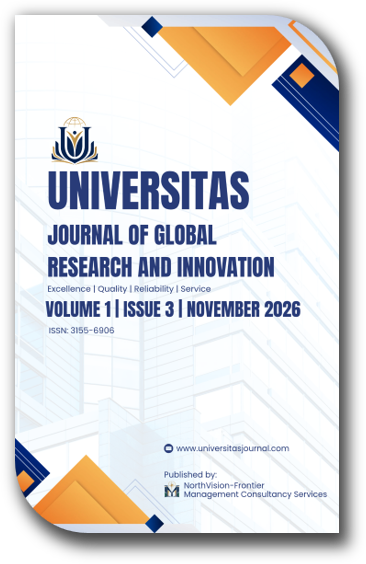
Journal cover

About the Journal

UNIVERSITAS: Journal of Global Research and Innovation (UJGRI) is an international, peer-reviewed scholarly journal dedicated to advancing the frontiers of knowledge through the publication of rigorous, evidence-based, and impactful research across diverse academic disciplines. The journal serves as a global platform for the dissemination of original research, theoretical developments, systematic reviews, case studies, methodological innovations, and interdisciplinary scholarship that address contemporary challenges and contribute to sustainable societal progress.

Grounded in the principles of scientific integrity and academic excellence, UNIVERSITAS recognizes that meaningful innovation emerges from research that is methodologically sound, ethically conducted, and capable of withstanding critical scholarly scrutiny. The journal is committed to publishing works that generate reliable evidence, challenge existing paradigms, inspire informed decision-making, and foster intellectual advancement across local, regional, and international contexts.


Journal Identity, Indexing, and Databases

OpenAlex logo

OpenAlex

Search OpenAlex for a selected UNIVERSITAS article.

Search OpenAlex