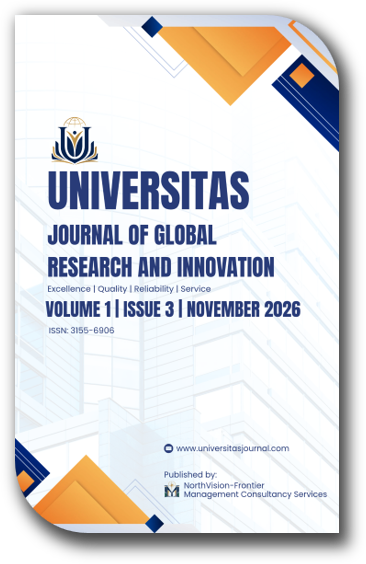
A Comparative Analysis of the Science Process Skills of Academically at-Risk Entry-Level and Exit-Level Junior High School Learners
DOI:
https://doi.org/10.5281/zenodo.24081226Keywords:
academically at-risk learners, basic science process skills, integrated science process skills, entry level, exit level, interventionAbstract
This study assessed and compared the science process skills of academically at-risk learners at the entry and exit levels of junior high school. It aimed to determine the proficiency level of the basic and integrated process skills of learners and the significant differences between the two groups. A quantitative approach using a descriptive comparative research design was employed. Purposive sampling was utilized to identify and select the participants based on the established criteria of academic risk. The participants in the study were the twenty-nine (29) Grade 7 learners who are at the entry level and twenty-three (23) Grade 10 learners at the exit level of junior high school. The data were gathered using a validated researcher-developed instrument. Descriptive statistics indicated that academically at-risk learners at the entry level achieved the highest mean score and mean percentage in inferring, which was classified as moderately developed, while they showed the least development in identifying variables and other science process skills. For the exit level, the results indicated that learners achieved similar outcomes in defining variables, inferring, and formulating hypotheses, all of which are categorized as underdeveloped skills. The Mann-Whitney U test also revealed significant differences between the two groups in terms of observing, interpreting data, and designing investigations. The overall findings revealed that both learners from the entry and exit levels displayed low proficiency in basic and integrated process skills. The findings of the study highlight the continuing learning gaps among academically at-risk learners across grade levels. Therefore, targeted instructional interventions are deemed necessary to address these deficiencies and improve learners’ performance in science.
Downloads
References
Belouiza, O., Er-Rechydy, A., & Koumachi, B. (2024). Prior knowledge activation through the use of effective reading strategies. International Journal of English Literature and Social Sciences, 9(3), 389–394.https://doi.org/10.22161/ijels.93.49
Bernardo, A. B. I., Cordel, M. O., Calleja, M. O., Teves, J. M. M., Yap, S. A., & Chua, U. C. (2023). Profiling low-proficiency science students in the Philippines using machine learning. Humanities and Social Sciences Communications, 10, Article 192. https://doi.org/10.1057/s41599-023-01705-y
Buban, A. T. (2023). Difficulties in learning science: Basis for intervention. ResearchGate. https://www.researchgate.net/publication/374949882_DIFFICULTIES_IN_LEARNING_SCIENCE_BASIS_FOR_INTERVENTION
Calleja, M. O., Cordell, M. O., Teves, J. M., Yap, S. A., Chua, U., & Bernardo, A. B. I. (2023). Addressing the poor science performance of Filipino learners: Beyond curricular and instructional interventions (DLSU-AKI Policy Brief, Vol. XIV, No. 3). Angelo King Institute for Economic and Business Studies, De La Salle University. https://animorepository.dlsu.edu.ph/res_aki/91
Canoy, A. M. (2024). The influence of inquiry-based learning on integrated science process skills of college students in Tagum City: Basis for an intervention plan. EPRA International Journal of Multidisciplinary Research, 10(8). https://doi.org/10.36713/epra18107
Davison, M., Postell, S., Isaacs, J., & Hashim, A. K. (2024). High dosage tutoring for academically at-risk students. NWEA.
Department of Education. (n.d.). MATATAG science curriculum guide: Grades 4 and 7. https://www.deped.gov.ph/wp-content/uploads/MATATAG-Science-CG-Grade-4-and-7.pdf
Fajardo, M. T. M. (2023). Fostering science process skills: Strategies and issues. Science International (Lahore), 35(4), 461–465.
Gizaw, G. G., & Sota, S. S. (2023). Improving science process skills of students: A review of literature. Science Education International, 34(3), 216–224. https://doi.org/10.33828/sei.v34.i3.5
Organisation for Economic Co-operation and Development. (2023). PISA 2022 results (Volume I): The state of learning and equity in education. OECD Publishing. https://doi.org/10.1787/53f23881-en
Rivera, M. M., & Manalastas, A. S. (2025). Exploring science teachers’ competence and laboratory management capability on students’ basic science process skills. International Journal of Research Publication and Reviews, 6(1), 2225–2235. https://ijrpr.com/uploads/V6ISSUE1/IJRPR37822.pdf
Salanatin, M. J. M. (2020). Guided quick labs and academically challenged learners’ predicting, observing, and inferring skills. Philippine Social Science Journal, 3(1), 101–111.https://doi.org/10.52006/main.v3i1.129
Tan, R. M., Yangco, R. T., & Que, E. N. (2020). Students’ conceptual understanding and science process skills in an inquiry-based flipped classroom environment. Malaysian Journal of Learning and Instruction, 17(1), 159–184. https://doi.org/10.32890/mjli2020.17.1.7
Downloads
Published
Issue
Section
License
Copyright (c) 2026 Maria Niña P. Jalbuna (Author)

This work is licensed under a Creative Commons Attribution 4.0 International License.