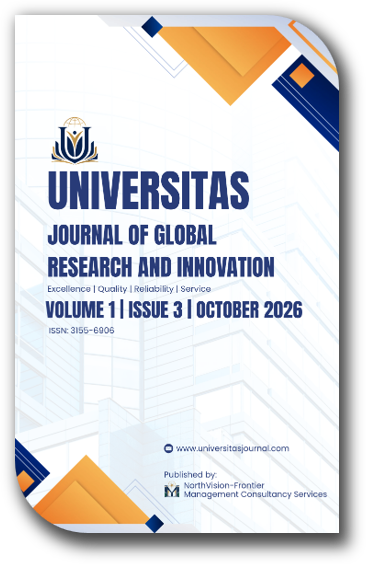
Vol. 1 No. 3 (2026): October Issue

					View Vol. 1 No. 3 (2026): October Issue

Our October Issue of Universitas: Journal of Global Research and Innovation brings together multidisciplinary research that connects ideas, advances knowledge, and addresses real-world challenges. Guided by our core values of Excellence and Quality, this issue highlights scholarship that contributes to the United Nations Sustainable Development Goals (SDGs) and supports a more inclusive and sustainable future.

Published: 2026-10-03

Research Articles

  • Research Articles

    Word Drills and the Reading Ability of Grade V Pupils in Molino Elementary School

    • Randy Maño Molino Elementary School, Schools Division of Bacoor City
    • Benita Borromeo Molino Elementary School, Schools Division of Bacoor City
    DOI https://doi.org/10.5281/zenodo.23132738
    Pages 1-10
    Abstract

    Reading is a foundational life skill, yet many upper-elementary pupils still struggle to recognize common words, which slows their reading and weakens comprehension. This action research examined whether structured word drills improve the reading ability of Grade V pupils. Specifically, it sought to identify the reading difficulties of the pupils, the word drill strategies that could help them, and whether these drills improved their reading performance. A descriptive design with a pre-test and post-test was employed among 40 Grade V pupils, ten from each of four sections of Molino Elementary School, Bacoor City, selected through universal sampling. The instrument was a validated 20-item yes-no checklist drawn from the Dolch Basic Sight Words (Levels 1–6). Over two weeks, the pupils underwent a series of drills: backward build-up, repetition and chain, single-slot and multi-slot substitution, transformation, and question-and-answer drills. Data were analyzed using mean, percentage, paired t-test, and one-way ANOVA. The pupils struggled with unfamiliar words, inaccurate decoding, comprehension, and reading speed. Their mean score rose from 9.05 (SD = 2.97) in the pre-test to 17.83 (SD = 2.15) in the post-test, and every pupil improved. The paired t-test showed a highly significant difference, t(39) = 22.80, p < .001, while no significant difference was found among the four sections (p = .089). The study concludes that varied, systematic word drills effectively develop the sight-word recognition and reading ability of Grade V pupils. It recommends that teachers sustain and extend the drills across grade levels and that school heads provide the necessary reading materials.


  • Research Articles

    Strengthening Community-Based Maternal Health: Pregnancy Complications, Associated Risk Factors, and Development of an Enhanced Prenatal Program in Selected Barangays of Tanudan, Kalinga

    • Karen S. Ligab Kalinga State University
    DOI https://doi.org/10.5281/zenodo.23133326
    Pages 11-27
    Abstract

    Pregnancy complications remain a concern in geographically isolated communities where distance, transportation difficulties, and cultural barriers affect access to maternal care. This study examined pregnancy complications in selected barangays of Tanudan, Kalinga, and associated factors to inform enhancements to a community-based prenatal program. A descriptive comparative design combined Rural Health Unit records for 2021–2025 with survey responses from 93 mothers selected through stratified random sampling in Dacalan, Gaang, Lower Lubo, Upper Lubo, and Babbanoy. A structured questionnaire collected demographic, socioeconomic, and health profiles and ratings of social, economic, behavioral, and environmental factors. The questionnaire underwent expert validation and yielded a Cronbach’s alpha of 0.78. Frequencies, means, prevalence calculations, and statistical comparisons were used to summarize the data. Health records documented 99 pregnancy complications, with pregnancy-induced hypertension the most frequent condition. The overall mean for associated factors was 1.76, interpreted as rarely at risk. Behavioral factors had the highest category mean of 2.06, followed by environmental factors at 1.75, economic factors at 1.68, and social factors at 1.54. The reported analyses identified significant relationships between complications and behavioral factors (p = .002) and environmental factors (p = .03). The findings support attention to prenatal attendance, maternal health education, and access to timely care. The proposed InaAlerto program combines barangay learning sessions, partner participation, mobile prenatal services, emergency transport arrangements, and health communication in locally understood languages. These proposed measures provide a basis for cooperation among local government, health personnel, families, and community leaders to strengthen culturally responsive maternal care in remote communities. Further assessment is needed before program implementation and evaluation.

  • Research Articles

    The Role of Philippine Higher Education Institutions in Empowering Indigenous Communities through Enterprise Development: A Systematic Scoping Review

    • Marlon Fortunato Lyceum of the Philippines University
    • Earl Denzel Tan Lyceum of the Philippines University
    • Michelle Lei Victorino Lyceum of the Philippines University
    DOI https://doi.org/10.5281/zenodo.23140497
    Pages 28-47
    Abstract

    There is an emerging awareness of the role Higher Education Institutions play in promoting inclusive development through enterprise-oriented extension services, especially by Indigenous Peoples. This scoping review was guided by PRISMA framework and aimed to explore Higher Education Institution programs and initiatives related to enterprise development involving indigenous communities in the Philippines. The review included 20 published literatures from 2015 to 2025. Various literature types and sources were searched and considered, including journal articles, theses, government publications, and institutional reports. The inclusion criteria focused on enterprise program categories, higher education interventions, and outcome patterns. The result of the scoping review identified higher education’s role in microenterprise development. It was found that HEIs contribute to livelihood and microenterprise development through interventions, capacity-building, enabling institutional environment, and research. Most interventions follow a skills-to-enterprise pathway, emphasizing participatory engagement, contextualized enterprise design, and alignment with rights-based and policy frameworks. Outcomes are strongest in capacity and skills development, participation, and early livelihood gains, while evidence on long-term enterprise sustainability remains limited. The study emphasized the need for sustained incubation support, market integration, and more robust evaluation designs to strengthen the long‑term impact of HEI-led indigenous enterprise initiatives.

  • Research Articles

    Utilizing Pool Noodles as Padded Sticks in Arnis Sparring Among College Students: Basis for Equipment Innovation

    • Joel D. Anajao Cavite State University
    • Jerard Noel M. Martinez Cavite State University
    • Amiel M. Cortez Cavite State University
    DOI https://doi.org/10.5281/zenodo.23175080
    Pages 48-66
    Abstract

    Sparring in Arnis is rarely incorporated into typical physical education classes. This is due to the inaccessibility or unavailability of protective gear, which is only available to varsity athletes in Arnis. The researchers used polyethylene foam sticks, commonly called pool noodles, in the sparring sessions to make the activity enjoyable and safe. This study aimed to determine the advantages, disadvantages, and limitations of using pool noodles as an alternative sparring tool in Arnis classes. College students (50) participated in the study. The findings identified several advantages and disadvantages associated with using pool noodles as sparring sticks. The dominant theme was the contribution to student safety and enjoyment during the sparring sessions. However, participants identified limitations, particularly the excessive softness and flexibility of the materials, which may reduce their effectiveness and realism during sparring. The finding may serve as a basis for developing an improved Arnis sparring stick that retains the safety, affordability, and user-friendly characteristics of pool noodles while incorporating the firmness, handling, and performance characteristics of traditional rattan sticks.

  • Research Articles

    An Assessment of the Sendai Framework in the Province of Laguna

    • Maria Rencelyn V. Valdenarro Polytechnic University of the Philippines
    DOI https://doi.org/10.5281/zenodo.23175086
    Pages 67-90
    Abstract

    The rising frequency of extreme climate events highlights the urgent need for effective local disaster risk reduction and management (DRRM). In the 2024 World Risk Report, the Philippines ranked highest globally on the World Risk Index for the third consecutive year. This study assessed the awareness, utilization, satisfaction, and perceived effectiveness of the UN Sendai Framework for Disaster Risk Reduction (2015–2030) among Local Disaster Risk Reduction and Management Offices (LDRRMOs) in Laguna. Anchored in Uses and Gratifications Theory and Social Judgment Theory, the research employed a quantitative survey design targeting 94 local DRRM officers across 30 municipal and city LGUs. The findings revealed a key implementation paradox: officers exhibit moderate theoretical awareness of specific global targets, yet report high operational utilization, high satisfaction, and high perceived effectiveness. Statistical testing confirmed a strong positive relationship between utilization and satisfaction. Inferential analysis demonstrated that educational attainment and years of service have statistically significant positive relationships with overall awareness. The study concludes that local implementation relies primarily on top-down statutory compliance under national mandates—specifically Republic Act 10121 and the NDRRMP 2020–2030—rather than a deep institutional understanding of the international blueprint. Key recommendations include conducting targeted orientations for newly appointed officers and institutionalizing clear, grassroots strategic risk communication channels.

  • Research Articles

    Improving Reading Achievement Through the ARAL Learning Recovery Program: A Multilevel Study Using Phil-IRI

    • Cathelyn T. Oculam Cebu Technological University
    DOI https://doi.org/10.5281/zenodo.23208714
    Pages 91-104
    Abstract

    Many learners reach the end of junior high school still reading at the frustration level, just before the Senior High School curriculum demands independent, research-based reading. The Academic Recovery and Accessible Learning (ARAL) Program is the Philippines’ national learning recovery intervention, yet independent evidence of its effect at the secondary level remains limited. To determine the effectiveness of the ARAL Program in improving the reading achievement of Grade 10 frustration-level readers at Pinamungajan National High School, Cebu Province, School Year 2025–2026, as measured by the Philippine Informal Reading Inventory (Phil-IRI). A quantitative, single-group pretest–posttest design was used. All 86 Grade 10 learners classified at the frustration level in both Word Reading and Reading Comprehension were enumerated, together with six ARAL tutors. Data came from the Phil-IRI (before and after the program), a learner profile questionnaire, and a researcher-made tutor questionnaire on perceived reading challenges. Data were analyzed using frequency, percentage, weighted mean, standard deviation, and the exact McNemar test. Most learners were aged 15–16 (90.7%), male (75.6%), and had parents or guardians with a high school education (74.4%); 82.6% attended eight or fewer ARAL sessions. Tutors rated learner-, home-, school-, and teacher-related factors as very serious concerns (overall M = 3.46). After the program, 52 learners (60.5%) advanced from the frustration to the instructional level in Word Reading and 11 (12.8%) did so in Reading Comprehension; no learner declined and none reached the independent level. Both changes were statistically significant (exact McNemar p < .001 and p = .001, respectively). The ARAL Program was associated with significant gains in reading achievement, with markedly larger gains in decoding than in comprehension. Closing the comprehension gap likely requires explicit comprehension instruction, more consistent attendance, and stronger home, school, and tutor support. A Reading Achievement Enhancement Plan is proposed on this basis.

  • Research Articles

    Reflections of Teenage Mothers: A Phenomenological Study

    • Ramy D. Demotica Iloilo State University of Fisheries Science and Technology
    DOI https://doi.org/10.5281/zenodo.23208767
    Pages 105-125
    Abstract

    Teenage motherhood presents complex emotional, social, educational, health, and economic challenges, yet the personal voices of young mothers are often overlooked. This study explored the lived experiences and reflections of teenage mothers aged 13–19 in Barangay Calumpang, Molo, Iloilo City, focusing on their experiences during pregnancy, childbirth, and early motherhood, the challenges and emotional experiences they encountered, and the meanings they derived from their experiences. A qualitative phenomenological design was employed. Nine teenage mothers were purposively selected and interviewed using semi-structured, open-ended questions. Data were analyzed using Colaizzi’s method, involving familiarization with the data, extraction of significant statements, formulation of meanings, clustering of themes, development of an exhaustive description, participant validation, and finalization of the findings. The findings revealed that pregnancy was commonly experienced as an unexpected and frightening life transition characterized by shock, fear, isolation, regret, social judgment, disrupted education, and difficulties accessing healthcare. Childbirth was associated with fear, economic hardship, inadequate support, emotional distress, and feelings of being unprepared for motherhood. During early motherhood, participants experienced disrupted schooling, isolation, financial difficulties, family rejection, and social stigma. Despite these hardships, the participants demonstrated resilience, personal growth, strengthened relationships, acceptance, and a deep sense of love and responsibility toward their children. The findings emphasize the need for holistic and compassionate interventions that integrate emotional support, accessible healthcare, educational opportunities, family guidance, and community-based support systems for teenage mothers.

  • Research Articles

    Dual Identities of Weekend Soldiers: A case study on reservist soldiers in the Philippines

    • Jacky Ann Llander Polytechnic University of the Philippines-Graduate School
    DOI https://doi.org/10.5281/zenodo.23208846
    Pages 126-135
    Abstract

    This study explores the lived experiences of reservist soldiers in the Philippines as they navigate their dual identities as civilian professionals and members of the military reserve force. Titled Dual Identities of Weekend Soldiers: A Case Study on Reservist Soldiers in the Philippines, the research aims to examine how reservists manage role conflict, balance responsibilities, and integrate their civilian and military roles.

    Using a qualitative descriptive case study design, data were gathered through semi-structured interviews with selected reservist soldiers. The study focused on understanding their personal motivations for joining the reserve force, strategies for balancing dual responsibilities, the reciprocal influence of military and civilian experiences, the challenges encountered, the coping mechanisms employed, and the support systems available to them.

    Findings revealed that reservists continuously negotiate their dual roles through effective time management, prioritization, and strong personal values such as discipline, commitment, and adaptability. Their military training positively influences their civilian work ethic, leadership, and resilience, while their civilian skills enhance their performance in military duties. However, participants also face significant challenges, including time constraints, role conflict, physical and mental fatigue, and limited institutional support. To cope, reservists employ various strategies such as maintaining structured routines, seeking social support, and developing adaptive mindsets.

    The study reveals the critical need to strengthen organizational and institutional support systems for reservists, including workplace understanding, policy development, and enhanced military training/programs. It further highlights the importance of comprehensive support mechanisms coming from civilian organizations, families, and reserve units. Workplace flexibility and understanding from civilian employers, combined with the emotional and practical support of families, enable reservists to manage their dual responsibilities effectively.

    Moreover, sustained support from reserve units, including essential resources such as uniforms, transportation, and other operational requirements during training, mobilization, and call to duty, is crucial to ensuring their readiness and effectiveness. These findings contribute to a deeper understanding of the dual-role experience of reservist soldiers and provide a basis for developing programs that holistically support their well-being and operational performance in both civilian and military roles.

  • Research Articles

    Compliance With Core Infection Prevention and Control Practices: Associated Factors and Impact on Healthcare Workers in Paracelis District Hospital

    • Mirra D. Baguiwan Kalinga State University
    DOI https://doi.org/10.5281/zenodo.23273612
    Pages 136-175
    Abstract

    Compliance with Core Infection Prevention and Control Practices: Associated Factors and Impact on Healthcare Workers in Paracelis District Hospital. Infection Prevention and Control (IPC) is critical to patient safety and occupational health, yet compliance remains suboptimal especially in district-level hospitals where resources and staffing are limited. This study aims to assess compliance with core IPC practices, its associated factors, and occupational impact among healthcare workers in Paracelis District Hospital, Paracelis, Mountain Province. The study will employ a quantitative, descriptive cross-sectional design. Using total enumeration or proportionate stratified sampling, all eligible healthcare workers currently employed with at least three months of service and with direct or potential exposure to patients or infectious materials will be included. Participants include registered nurses, physicians, midwives, nursing assistants/attendants, medical technologists, radiologic personnel, and other allied health workers. A structured questionnaire developed from WHO standard precautions framework and recent empirical literature will be utilized. It consists of six parts: (1) demographic and professional profile (age, sex, professional category, educational attainment, years of service, department/unit, employment status, and previous IPC training); (2) knowledge on core IPC; (3) attitude toward IPC; (4) compliance along eight domains — hand hygiene, personal protective equipment, sharps safety, respiratory hygiene and cough etiquette, safe injection practices, healthcare waste management, environmental infection prevention, and transmission-based precautions; (5) organizational factors including availability of supplies/facilities, organizational support and supervision, workload and staffing conditions, and safety climate; and (6) occupational impact such as needlestick/sharps injury, blood and body fluid exposure, respiratory exposure, perceived infection risk, work disruption/absenteeism, and exposure-related concerns. The instrument undergoes expert content validation using Item-Level and Scale-Level Content Validity Index (I-CVI/S-CVI) and pilot testing for reliability using Cronbach's alpha. Data will be gathered after securing ethics clearance and institutional permission, with informed consent. Data will be analyzed using descriptive and inferential statistics to determine compliance levels, differences when grouped by profile, and significant relationships between individual/organizational factors and compliance. Findings will serve as empirical basis for an evidence-based IPC Enhancement Plan to strengthen compliance, organizational support, and occupational safety in the hospital.

  • Research Articles

    Organizational Development Plan for Labigan Farmers Association

    • Ailyn Jamelarin-Cablas Northern Negros State College of Science & Technology
    DOI https://doi.org/10.5281/zenodo.23275146
    Pages 176-186
    Abstract

    The Labigan Farmers Association is composed of newly installed Agrarian Reform Beneficiaries (ARBs) in Sara, Iloilo, covering 222 hectares and involving 96 beneficiaries. Although the property was awarded in 1995, the farmers gained actual possession only in September 2016. The association was organized to respond to members’ limited knowledge of the Agrarian Reform Program, difficulty in accessing credit and financial assistance, and limited access to government programs and projects. This study presents an organizational development plan designed to strengthen the association and support its transition toward a cooperative. A case-based organizational development planning approach was used, drawing on the organization’s situational analysis, SWOT matrix, project logframe, strategic direction, and implementation and risk management plan. The assessment identified strong membership support, supportive officers, a large agrarian reform area, willingness to convert into a cooperative, an office, and an existing capital build-up as important strengths. Key weaknesses included insufficient production funds, limited knowledge, lack of capability-building opportunities, low member income, weak access to credit, and the absence of business and service activities. The proposed plan focuses on legal personality, membership, leadership, policies and procedures, capital build-up, savings mobilization, business enterprises, books of accounts, and networking and linkaging. The plan provides measurable targets and an implementation framework intended to promote effective management, sustainable enterprise development, stronger access to financial assistance, and improved member welfare.

  • Research Articles

    The Effectiveness of the Thematic Integration of Music, Arts, Physical Education, and Health (MAPEH) in Grades 4 and 5 in Nabua West District, Division of Camarines Sur

    • Robert N. Lontayao University of Northeastern Philippines
    DOI https://doi.org/10.5281/zenodo.23293561
    Pages 187-207
    Abstract

    This study examined teachers’ assessments of thematic integration in Music, Arts, Physical Education, and Health (MAPEH) in Grades 4 and 5 in Nabua West District, Division of Camarines Sur, during school year 2025–2026. Using a descriptive–evaluative–inferential survey design, it assessed perceived integration in relation to critical thinking, problem-solving, memory retention, learner motivation, and collaboration; examined perceived effectiveness for instructional practice; compared rank-order assessments; and developed policy recommendations. All 34 Grade 4 and Grade 5 MAPEH teachers from 17 elementary schools participated, comprising 17 teachers from each grade level. A researcher-developed, five-point questionnaire collected responses. Weighted means, ranking, descriptive distributions, and Mann–Whitney U tests were reported, with a nominal significance level of .05. Perceived thematic integration averaged 3.68 (Much Evident), with Grade 4 teachers reporting 3.90 and Grade 5 teachers reporting 3.46. Learner motivation ranked highest (3.83), while problem-solving ranked lowest (3.49). Perceived instructional effectiveness averaged 3.70 (Much Effective), including 3.94 for Grade 4 and 3.46 for Grade 5; enhancing integration ranked highest (3.89), and teacher collaboration lowest (3.45). The detailed statistical tables indicated significant rank-order differences for three learner-related domains and four instructional domains, but not for the remaining domains. Findings support targeted collaborative planning, coherent theme identification, curricular alignment, and district monitoring. Because findings represent teacher perceptions rather than directly measured pupil outcomes, the study establishes perceived implementation and effectiveness, not causal learning gains.

  • Research Articles

    Civic Trust and Local Accountability: Public Ethics Among Barangay Officials in the Seaside A, B, and Poblacion Clusters of Boac, Marinduque, Philippines

    • Ehrol Benedik H. Leva Marinduque State University
    • Raoul J. Magcamit Marinduque State University
    DOI https://doi.org/10.5281/zenodo.23294248
    Pages 208-236
    Abstract

    Republic Act (RA) No. 6713 defines the ethical standards for Philippine public servants, yet its observance at the barangay level, where citizens meet the state most directly, has received limited empirical attention. This study examined how elected officials in 20 barangays of Seaside A, Seaside B, and Poblacion clusters of Boac, Marinduque, understand and apply the law, how accountability mechanisms operate, and what these conditions imply for civic trust. Under a mixed-methods triangulation design, structured questionnaires were administered to 272 purposively selected officials, comprising Punong Barangays, Sangguniang Barangay members, and Sangguniang Kabataan chairpersons and members; responses were analysed using weighted means and standard deviations. Key informant interviews and focus group discussions supplied qualitative data, which were analysed thematically. Respondents reported complete familiarity with the provisions of RA 6713 and consistent observance of its standards in leadership (WM = 3.61), service delivery (WM = 3.64), and the use of public resources (WM = 3.65). Barangay assemblies and financial disclosure emerged as the most firmly established accountability mechanisms, whereas participatory budgeting and feedback channels lagged behind. Among ethical challenges, resisting political pressure received the lowest rating (WM = 3.54). Interviews identified transparency boards, social media groups, and community reputation as informal yet effective sources of accountability. The findings indicate that ethical knowledge and compliance are no longer the binding constraint; the more pressing gaps lie in limited citizen participation and persistent political influence. The study recommends strengthening participatory structures, introducing digital transparency platforms, and extending ethics training to appointed barangay personnel.

  • Research Articles

    SIGLA (Strategic Intervention Guided by Learning Analytics): From Learning Data to Learning Gains through a Data-Informed Intervention in Araling Panlipunan

    • Reynalyn M. Inocencio Malagab-i Elementary School
    DOI https://doi.org/10.5281/zenodo.23330719
    Pages 237-249
    Abstract

    This study determined the effectiveness of SIGLA (Strategic Intervention Guided by Learning Analytics): From Learning Data to Learning Gains through a Data-Informed Intervention in Araling Panlipunan. The study was conducted in response to the need to address learning gaps and improve learners' mastery of Araling Panlipunan competencies through the use of assessment data and targeted instructional interventions. Specifically, it examined the learners' performance before and after the implementation of the SIGLA intervention and determined whether a significant difference existed between their pretest and posttest scores. A one-group pretest-posttest pre-experimental research design was employed involving eighteen (18) Grade 5 learners of Malagab-i Elementary School during the School Year 2026-2027. A validated 40-item achievement test based on the Most Essential Learning Competencies (MELCs) in Araling Panlipunan was utilized as the research instrument. Data were analyzed using mean, Mean Percentage Score (MPS), and paired-samples t-test. Results revealed that learners obtained a pretest mean score of 20.10 with an MPS of 52.64%, indicating low mastery of the competencies. Following the implementation of SIGLA, the posttest mean score increased to 32.80 with an MPS of 81.94%, demonstrating improved performance and mastery. The paired samples t-test showed a statistically significant difference between the pretest and posttest scores (t = -9.79, p < .001). Moreover, the computed effect size (Cohen's d = 2.31) indicated a very large effect of the intervention. The findings suggest that SIGLA was effective in addressing learning gaps and enhancing learners' academic performance in Araling Panlipunan. The study highlights the value of learning analytics and data-informed instructional interventions in promoting improved learning outcomes and learner achievement.

  • Research Articles

    Instructional Leadership and Operational Challenges in Multi-Grade Schools Across Aguinaldo District: Inputs for a District Management Framework

    • Gretel A. Barwelo Northeastern College, Santiago City, Isabela, Philippines
    DOI https://doi.org/10.5281/zenodo.23330879
    Pages 250-263
    Abstract

    Effective instructional leadership is essential in multi-grade schools, where school heads must balance instructional responsibilities with operational demands. This study examined instructional leadership practices and operational challenges among school heads in Aguinaldo District, Schools Division of Ifugao, and developed a District Management Framework based on the findings. Employing a descriptive-correlational research design, the study involved 43 respondents selected through purposive sampling. Data were gathered using a panel-validated structured questionnaire administered through Google Forms and analyzed using descriptive statistics, Pearson product-moment correlation, and supplementary Spearman rank-order correlation. Results revealed that instructional leadership practices obtained a composite mean of 3.86, with teacher professional development recording the highest mean (3.98) and instructional resource management the lowest (3.73). Operational challenges likewise obtained a composite mean of 3.86, with resource availability emerging as the highest-rated challenge (3.92) and teacher deployment and workload the lowest (3.76). Pearson correlation revealed a statistically significant moderate positive relationship between instructional leadership practices and operational challenges (r = .514, p < .001), supported by Spearman correlation (ρ = .501, p < .001). These findings indicate that school heads reporting more frequent instructional leadership practices also tended to report greater operational challenges, without establishing causation. Consequently, a District Management Framework was developed to strengthen resource coordination, professional development, instructional support, workload management, stakeholder collaboration, and monitoring. The study recommends stakeholder consultation, coordinated district-level interventions, and periodic evaluation to support effective and sustainable multi-grade school management.

  • Research Articles

    Ensuring Health and Safety in Technical-Vocational Education: An Evaluation of First Aid Preparedness and Safety Practices in Cookery Laboratories

    • May Joy C. Fausto University of Perpetual Help System – DALTA
    DOI https://doi.org/10.5281/zenodo.23410250
    Pages 264-286
    Abstract

    It is imperative to provide health and safety among technical-vocational learners, especially those in cookery laboratories who are prone to occupational hazards that arise from the preparation of food and the utilization of kitchen equipment and gadgets. Although safety measures have been developed in schools, there is still a need to assess students’ first aid preparedness and safety practices to know if they are ready to handle any emergency that may occur within the laboratory. Little information about the correlation between first aid preparedness and safety practices among cookery learners makes it necessary to carry out further studies. This study sought to assess the degree of first aid preparedness and safety practices among cookery learners in a public secondary school. It also assessed the differences between the degree of preparedness and safety practices according to selected demographic characteristics as well as the relationship between first aid preparedness and safety practices. From the findings, it was evident that the respondents were highly prepared in terms of first aid and practiced safety measures in laboratory. The results also indicated that there were no significant differences between the demographics in terms of the preparedness of respondents and their safety measures. Finally, there was a positive, though insignificant, correlation between preparedness and safety practices in the laboratory. Even though the respondents are well prepared for emergencies and have been practicing safety in laboratory, first aid training and more emergency preparedness exercises, coupled with increased safety education programs, are vital in promoting safety measures.

  • Research Articles

    Content Creation Strategies on the Monetization and Revenue Optimization of Digital Platforms

    • Manuel Gelato Layosa Ergina Eulogio "Amang" Rodriguez Institute of Science and Technology
    • Thania Nicole Estojero Eulogio "Amang" Rodriguez Institute of Science and Technology
    • Princess Dianne Mendoza Nacianceno Eulogio "Amang" Rodriguez Institute of Science and Technology
    • Christopher John Magpatok Reyes Eulogio "Amang" Rodriguez Institute of Science and Technology
    • Ranny Boy Bremen Rizada Eulogio "Amang" Rodriguez Institute of Science and Technology
    • Reign Yumi Aba Santiago Eulogio "Amang" Rodriguez Institute of Science and Technology
    DOI https://doi.org/10.5281/zenodo.23410289
    Pages 287-294
    Abstract

    This study examines the content creation strategies that contribute to the monetization and revenue optimization of digital platforms, with a particular focus on student audiences. As social media continues to play a significant role in the daily lives of students, content creators must understand audience preferences and behaviors to produce engaging, relevant, and impactful content. The study aims to determine how audience analysis, content type, platform utilization, and engagement strategies influence the success and profitability of digital content. Using a quantitative research approach, data will be gathered from student respondents to identify the factors that attract them to content creators and influence their viewing habits, motivation, and online behavior. The research will also explore how content creators can balance audience engagement with responsible and meaningful content production. The findings are expected to provide insights into practices that enhance audience retention, increase engagement, and support revenue generation on digital platforms. The results may also help content creators, digital marketers, and platform managers develop strategies that align with audience interests while promoting positive social influence. Ultimately, the study emphasizes understanding target audiences as a key factor in sustainable monetization and long-term success in the digital content industry.

  • Research Articles

    Improving English Reading Comprehension Skills of Grade 3 Pupils Through Teacher-Made ContextualizedShort Reading Selections

    • Manolo S. Paragas, Jr. Northeastern College, Isabela, Philippines
    DOI https://doi.org/10.5281/zenodo.23410843
    Pages 295-306
    Abstract

    This study examined the effectiveness of teacher-made contextualized short reading selections in improving the English reading comprehension skills of Grade 3 pupils at Paulino L. Bautista Elementary School, Dinalungan District, Schools Division of Aurora, Philippines. Guided by the Active View of Reading, the study employed a quantitative quasi-experimental pretest–posttest comparison-group design involving 100 pupils, equally distributed between the intervention and comparison groups. Reading comprehension was measured using a 30-item assessment covering literal comprehension, inferential comprehension, and vocabulary in context. Data were analyzed using descriptive statistics, paired-samples t-tests, and Welch's independent-samples t-test. Results showed that the intervention group's mean score increased from 14.16 to 20.22, representing a mean gain of 6.06 points, while the comparison group's mean increased from 13.34 to 15.32, with a gain of 1.98 points. Both groups demonstrated statistically significant pretest–posttest improvements (p < .001). The difference in mean gains between groups was also statistically significant, t(94.31) = 9.16, p < .001, favoring the intervention group. Among the assessed dimensions, inferential comprehension recorded the greatest numerical improvement, followed by vocabulary in context and literal comprehension. These findings suggest that teacher-made contextualized short reading selections may contribute to improved English reading comprehension among Grade 3 pupils. The study highlights the potential value of integrating locally relevant reading materials and guided comprehension activities into elementary English instruction.

  • Research Articles

    Aral Reading Program and Reading Skills DevelopmentAmong Elementary Learners

    • Joldyn C. Cayari Northeastern College, Santiago City, Isabela, Philippines
    DOI https://doi.org/10.5281/zenodo.23410896
    Pages 307-321
    Abstract

    This study examined reading skills development among elementary learners participating in the Academic Recovery and Accessible Learning (ARAL) Reading Program in Lasam West District, Schools Division of Cagayan, Philippines. Specifically, it assessed changes in reading fluency, word recognition, and reading comprehension following an eight-week intervention period. A quantitative descriptive research design involving paired pre-test and post-test assessments was employed among 67 learners from Grades 1 to 6. Reading assessments were personally administered by the researcher using Department of Education reading materials. Reading fluency was measured through correct words per minute, while word recognition and reading comprehension were assessed using 10-item and five-item measures, respectively. Data were analyzed using descriptive statistics, paired-samples t-tests, and supplementary Wilcoxon signed-rank tests. Results revealed increases in mean reading fluency from 50.09 to 57.78 correct words per minute, word recognition from 4.87 to 6.00, and reading comprehension from 2.22 to 2.78. Statistically significant differences were observed across all three reading dimensions (p < .001). Individual progress analysis showed improvements in reading fluency among 79.1% of learners, word recognition among 70.1%, and reading comprehension among 49.3%. Although overall performance improved, variations in individual progress indicated continuing instructional needs, particularly in reading comprehension. The absence of a comparison group limits causal attribution of these improvements to the program. The findings provide localized evidence to support differentiated reading instruction, systematic progress monitoring, and targeted intervention enhancement to address learners' varying reading needs.

  • Research Articles

    Technological, Pedagogical, and Content Knowledge (TPACK) of Physics Teachers

    • Blossom Pearl P. Tabuada College of Education Graduate School, West Visayas State University
    • Chive G. Gabasa College of Education Graduate School, West Visayas State University
    DOI https://doi.org/10.5281/zenodo.23411137
    Pages 322-338
    Abstract

    This study aims to assess the Technological, Pedagogical, and Content Knowledge (TPACK) levels of Junior High School Physics teachers in the Philippines by evaluating teachers' strengths in each of the three TPACK domains with the goal of designing an in-service training program to inform future professional development and enhance physics education. A descriptive-correlational research design was used to assess the TPACK levels among 100 Junior High School Physics teachers selected through cluster random sampling from selected public secondary schools in Iloilo Province. A researcher-made TPACK questionnaire and interview guide, which underwent expert validation and pilot testing, were the instruments used. Results show that teachers have strong content and pedagogical knowledge, which they attribute to their teaching experience and ongoing professional development. However, confidence in technological knowledge is lower, likely due to limited use of technology in their teaching. The study also found a moderate positive correlation among all three TPACK domains, with the strongest link between pedagogical and content knowledge. This suggests that while teachers are effective in linking instructional strategies to subject content, technology integration remains an area for improvement. To enhance Physics instruction, the study recommends focusing professional development on technology integration. Providing more hands-on experience with educational technology will help teachers bridge the gap between their pedagogical, content, and technological knowledge, leading to more engaging and effective Physics teaching

  • Research Articles

    Interactive Storytelling and Contextualized Reading Passages for Key Stage 2 Araling Panlipunan: A Qualitative Document Analysis

    • Noimy L. Saet Northeastern College, Santiago City, Isabela, Philippines
    DOI https://doi.org/10.5281/zenodo.23429085
    Pages 339-352
    Abstract

    This qualitative document analysis synthesized published research and official documents concerning reading comprehension, content-area literacy, storytelling, and contextualized reading for Key Stage 2 Araling Panlipunan (AP). Seventeen publicly accessible documents dated 2021–2026 were purposively selected and examined using a structured coding matrix and reflexive thematic analysis. Six themes were developed: persistent reading-comprehension difficulties alongside reported improvements in Philippine assessments; the contribution of language and background knowledge; benefits and limits of integrated literacy and content instruction; associations between story-based approaches and language or literacy outcomes; the importance of medium and multimedia design; and inconsistent evidence concerning motivation as a pathway to comprehension. None of the documents in the selected corpus directly evaluated the combined use of interactive storytelling and contextualized passages in Key Stage 2 AP. A six-component, literature-derived instructional framework was therefore proposed, encompassing knowledge activation, interactive story delivery, contextualized passage reading, multimedia design, engagement support, and delivery-medium decisions. The framework was not empirically tested or validated. The synthesis offers a conceptual basis for developing and subsequently evaluating AP instructional materials, rather than evidence that the proposed approach improves learner outcomes.

  • Research Articles

    Economic Feasibility of Wind–Solar Hybrid Systems Compared with Diesel Generators for Off-Grid Households: A Scoping Review with Implications for Nueva Vizcaya, Philippines

    • Sandy D. Omas Northeastern College, Isabela, Philippines
    DOI https://doi.org/10.5281/zenodo.23429106
    Pages 353-370
    Abstract

    Access to affordable and reliable electricity remains a challenge in geographically isolated communities where conventional grid expansion is costly. This study examined the economic feasibility of wind–solar hybrid systems compared with diesel generators for off-grid households, with implications for Nueva Vizcaya, Philippines. A scoping review design was adopted, guided by the Joanna Briggs Institute methodology and PRISMA-ScR guidelines. The study considered published research and institutional reports on decentralized electricity generation. A structured search strategy, eligibility screening checklist, and data-extraction matrix were developed to examine system configurations, economic indicators, and financial assumptions. Descriptive mapping and narrative synthesis were selected to assess comparative costs and factors influencing economic feasibility. Preliminary Philippine evidence indicated that hybrid renewable-energy systems could reduce electricity-generation costs and diesel dependence under favorable conditions. One comparative study reported potential cost savings of 34.03% relative to diesel-based systems. However, economic performance depended on renewable-resource availability, electricity demand, storage requirements, fuel prices, capital investment, and financing arrangements. Findings from island microgrids also had limited direct applicability to household systems in mountainous communities. The study concludes that wind–solar hybrid systems represent a potential alternative for off-grid electrification, although their economic feasibility in Nueva Vizcaya remains uncertain. Further location-specific assessments incorporating renewable-energy resources, household electricity demand, and life-cycle costs are recommended to support sustainable rural electrification planning.

  • Research Articles

    Innovative Human Resource Management Strategies in the Food Service Industry: Basis for an Enhanced HRM Framework

    • Diana-Vi N. Gacula Isabela State University, Echague, Isabela, Philippines
    • Eva U. Cammayo Isabela State University, Echague, Isabela, Philippines
    DOI https://doi.org/10.5281/zenodo.23447893
    Pages 371-389
    Abstract

    This descriptive-comparative study examined innovative human resource management (HRM) strategies among food service establishments in Cauayan City, Isabela, Philippines, as a basis for an enhanced HRM framework. Using purposive sampling, the investigation surveyed 40 owners, HR managers, and employees associated with qualifying food service small and medium-sized enterprises. A structured questionnaire measured seven dimensions: flexible work systems and employee lifecycle, digital infrastructure and resource support, training and skill development, communication and motivation, employee well-being, health and safety, and organizational effectiveness and leadership. Frequency, percentage, weighted mean, independent-samples t-tests, and analysis of variance were used. Health and safety obtained the highest composite rating (3.43, very high), whereas communication, engagement, and motivation received the lowest (2.18, low). Organizational effectiveness and leadership (3.22), digital resource support (3.00), training (2.97), employee welfare (2.87), and flexible work systems (2.74) were rated high. Most demographic comparisons did not indicate statistically significant differences, although selected item-level exceptions were reported in the original thesis. The findings support an adaptive and resilient HRM framework linking employee safety, digital and flexible operations, workforce development, internal communication, and continuing evaluation. The survey captures respondents’ ratings of practices, rather than directly establishing effects on productivity or causal effectiveness. The proposed framework offers a structured basis for managerial planning in food service SMEs under economic uncertainty.

  • Research Articles

    An Assessment of the Leadership Styles of DepEd Rizal Management and Its Relation to Their Communication Patterns in the Workplace by Its Employees

    • Franz M. Olinares Polytechnic University of the Philippines
    DOI https://doi.org/10.5281/zenodo.23465612
    Pages 390-429
    Abstract

    This study examines the perceptions of DepEd Rizal subordinates regarding their superiors’ leadership styles and explores its relationship with communication patterns within the organization. Utilizing a quantitative research design, the study employed a structured survey distributed to systematically selected subordinates within DepEd Rizal. The leadership styles and communication patterns were analyzed using descriptive and inferential statistics to determine prevailing trends and correlations. Findings indicate that the delegative leadership style emerged as the most favored among subordinates based on the weighted mean, suggesting that employees value autonomy and trust in decision-making. Additionally, horizontal communication was the dominant communication pattern, indicating that employees frequently engage in peer-to-peer interactions rather than top-down or bottom-up communication. Furthermore, the results show a significant relationship between leadership styles and communication patterns, highlighting how different leadership approaches influence workplace communication dynamics. These insights provide valuable implications for enhancing leadership strategies and fostering effective communication within the organization. Given its scope, the study is limited to the perceptions of DepEd Rizal subordinates. It does not account for external variables such as organizational policies or the personal leadership preferences of superiors. Future research may explore school leaders' perspectives to gain a holistic view of leadership-communication dynamics in educational institutions.

  • Research Articles

    Assessment and Evaluation Study of Railway Engineering Education in the Philippines using a Triple Helix-Based Framework Composite Index Approach

    • Meeko C. Masangcap Polytechnic University of the Philippines, Bataan Peninsula State University
    • Kenneth Bryan M. Tana Polytechnic University of the Philippines
    DOI https://doi.org/10.5281/zenodo.23535998
    Pages 430-459
    Abstract

    Rapid modernization of the Philippine railway network demands a highly skilled domestic engineering workforce, yet higher education institutions lack standardized quantitative metrics to evaluate how academic programs align with industry needs and government policies. This study assessed and evaluated the state of railway engineering education in the Philippines using a Triple Helix-based composite index approach that integrates the academic, government, and industry dimensions of an innovation ecosystem. Specifically, the investigation sought to determine the relative importance of ten Triple Helix capacity indicators and to measure the institutional performance of partner universities offering railway-related programs in Metro Manila. Using a quantitative descriptive-evaluative research design, the Analytic Hierarchy Process was employed to derive indicator weights from pairwise comparisons completed by forty-two expert respondents drawn from the academic, government, and industry sectors. Expert judgments were aggregated through the geometric mean method, validated using consistency ratios, and combined with MinMax normalized institutional data and General Appropriations Act funding records to compute composite index scores. Results revealed that the academic dimension carried the highest priority weight at 72.24%, followed by the government dimension at 19.03% and the industry dimension at 8.73%, with all comparison matrices satisfying the consistency threshold below 0.10. Globally, specialized railway engineering courses emerged as the single most critical indicator at 33.56%, followed by faculty lecturers at 15.71% and student enrollment and graduates at 14.48%. Composite index scores ranked the Polytechnic University of the Philippines first at 0.8433, FEATI University second at 0.6928, and the Technological Institute of the Philippines third at 0.2218, confirming that a specialized railway curriculum supported by qualified faculty, government partnerships, and sustained industry linkages drives institutional readiness.

  • Research Articles

    Development of a Contextualized Performance-Based Assessment Plan for Reading and Writing

    • Jeffrey E. Iniwan Labas Senior High School Santa Rosa, Laguna
    DOI https://doi.org/10.5281/zenodo.23548958
    Pages 460-467
    Abstract

    Abstract. This action research aimed to develop a contextualized performance-based assessment plan for Grade 11 Reading and Writing by addressing gaps in existing assessment practices and ensuring alignment with Most Essential Learning Competency (MELC). A qualitative action research design was employed, utilizing purposive sampling with the teacher-researcher’s own classes at Labas Senior High School as participants. The study involved approximately one class of Grade 11 students, with data gathered through self-reflection logs and classroom observations. Data was analyzed using thematic analysis to identify recurring issues related to assessment practices, content relevance, and student engagement. Findings revealed that instructional materials were predominantly Westernized, resulting in limited relatability and engagement among learners, and that assessment practices were often misaligned with intended competencies and lacked meaningful feedback mechanisms. In response, a contextualized assessment plan incorporating locally relevant texts from Santa Rosa, Laguna was developed, integrating varied and performance-based assessment methods aligned with content and performance standards. The study concluded that contextualization and alignment are essential in improving the effectiveness of assessment in Reading and Writing. It is recommended that educators adopt localized and Most Essential Learning Competency (MELC) assessment strategies, continuously reflect on their practices, and utilize diverse assessment tools to better capture students’ competencies and enhance overall learning outcomes.

  • Research Articles

    Identifying the Reading Difficulties of Grade 2 Pupils in Developing Reading Fluency

    • Adela B. Lindawan Northeastern College, Santiago City, Isabela, Philippines
    DOI https://doi.org/10.5281/zenodo.23554662
    Pages 468-486
    Abstract

    Reading fluency is essential to early literacy development because it supports accurate word recognition, efficient reading, and comprehension across learning areas. This study examined the reading difficulties of Grade 2 pupils at Ammoweg Elementary School, Asipulo District, Schools Division of Ifugao, Philippines, with emphasis on English reading activities and written Mathematics problems. A quantitative descriptive research design was employed using a modeled population of 30 Grade 2 pupils selected through total enumeration. Reading performance was assessed through a 30-item word recognition task, an oral reading passage, a 10-item comprehension assessment, and five mathematical word problems. Frequencies, percentages, means, and standard deviations were used to describe performance and identify common difficulties. Results showed a mean word recognition score of 21.4 out of 30, oral reading accuracy of 88.6%, reading rate of 48.2 correct words per minute, and comprehension score of 6.3 out of 10. The most frequent difficulties involved decoding unfamiliar words (70.0%), hesitant oral reading (63.3%), and recognizing common words (56.7%). Understanding mathematical vocabulary (60.0%) and identifying relevant information in word problems (56.7%) were also common difficulties. Pupils with higher reading rates generally demonstrated better comprehension scores, although the descriptive design did not establish causality. The findings highlighted the importance of differentiated reading instruction, systematic decoding activities, vocabulary development, guided oral reading, and comprehension support. The study provided a classroom-based framework for identifying reading difficulties and organizing targeted literacy interventions.

  • Research Articles

    SCIENCE QUEST: A Structured Inquiry - Based Learning Intervention for Improving Learners’ Scientific Inquiry Skills

    • Mary Ann L. Navarra Iloilo State University of Fisheries Science and Technology
    DOI https://doi.org/10.5281/zenodo.23558956
    Pages 487-501
    Abstract

    Scientific inquiry supports scientific literacy by helping learners formulate investigate questions, develop hypotheses, plan investigations, analyze evidence, and communicate explanations rather than merely recall facts. At Leganes National High School in Iloilo, classroom observations identified difficulties among Grade 11 Science learners in applying these processes. This action research examined whether SCIENCE QUEST, a structured inquiry-based intervention, could improve learners’ scientific inquiry skills. It focused on pretest–posttest performance across five dimensions: question formulation, hypothesis development, investigation design, data analysis, and communication of explanations. The study employed a quantitative, one-group pretest–posttest action research design with 40 Purposively selected Grade 11 General Science learners. Data were collected before and after a six-week intervention using the Scientific Inquiry Skills Assessment Questionnaire (SISAQ), described as a 35-item assessment covering five inquiry dimensions. SCIENCE QUEST followed six phases: Scientific Exploration, Question Development, Guided Investigation, Evidence Analysis, Scientific Explanation, and Reflection and Application. Analyses included descriptive statistics, a paired-samples test, and effect-size estimation. The results of the study show a mean increase from 14.60 to 23.15 out of 35, a gain of 8.55 points. The reported paired-test result was t(39)=12.59, p<.001, with Cohen’s dz=1.99. Gains were reported across all five dimensions, with the largest effect estimate for data analysis. The also results would to indicate that structured inquiry activities may strengthen learners’ inquiry skills. The study recommends validating and refining the intervention and assessment, applying SCIENCE QUEST in other science classes, and conducting further research with larger samples and comparison groups.

  • Research Articles

    Reading Intervention Practices and Instructional Adaptation for Struggling Readers Among Public Elementary School Teachers in Ambaguio, Nueva Vizcaya

    • Diana G. Allaga Northeastern College, Santiago City, Isabela, Philippines
    DOI https://doi.org/10.5281/zenodo.23612237
    Pages 502-514
    Abstract

    The present study explored reading intervention practices and instructional adaptations of struggling readers in the first to sixth grade level of the public elementary schools in Ambaguio District, Nueva Vizcaya. It included teachers' reported use of early identification, small group instruction, use of phonics and decoding, fluency, vocabulary, comprehension, use of localized materials, individualized remediation, home-school coordination, and instructional adjustments and perceived needs. This study employed a descriptive survey cross-sectional research design, a researcher made up questionnaire and 60 teacher respondents. Data was analyzed using frequencies, percentages, averages and standard deviations, where it was needed. A five-point interpretation scale was used, 1.00–1.80 = Very Low, 1.81–2.60 = Low, 2.61–3.40 = Moderate 3.41–4.20 = High, and 4.21–5.00 = Very High. The biggest domain mean was found in reading intervention practices (M = 4.06), then instructional adaptation practices (M = 3.77), and finally the perceived barriers and support needs (M = 3.67). Early identification had the highest mean response rating (M = 4.17) for the intervention practice and the repeated practice was the highest mean response rating (M = 3.98) for the instructional adaptation. There was a strong concern for the need for more specialized training (M = 4.25) and large class size (M = 4.18). The results identified needs for enhancing teaching support, reading resources, and teaching adjustment.

  • Research Articles

    Project GABAY-BASA: A Parent-Supported Home Literacy Intervention for Improving the Foundational Reading Skills of Grade 1 ARAL Learners in Alfonso Castaneda Central School

    • Jerilyn M. Campos Northeastern College, Santiago City, Isabela, Philippines
    DOI https://doi.org/10.5281/zenodo.23614597
    Pages 515-529
    Abstract

    Foundational reading difficulties among early-grade learners highlight the need for structured literacy interventions that extend instructional support beyond the classroom. This study examined changes in the foundational reading skills of 21 Grade 1 learners participating in the Academic Recovery and Accessible Learning (ARAL) Program at Alfonso Castaneda Central School, Philippines, following the implementation of Project GABAY-BASA, a parent-supported home literacy intervention. A quantitative, one-group pretest–posttest pre-experimental design was employed over eight weeks. Learners were assessed in five domains: letter recognition, phonological awareness, phonics and decoding, word recognition, and beginning reading fluency. The intervention incorporated teacher-prepared reading materials, differentiated exercises, parent-guided home activities, and progress monitoring. Data were analyzed using descriptive statistics, particularly mean scores and mean differences. Results showed that the overall mean reading score increased from 42.10 to 69.81 out of 100, representing a mean gain of 27.71 points. Improvements were observed across all five domains, with word recognition recording the greatest mean gain (6.00 points), followed by phonics and decoding (5.60), beginning reading fluency (5.51), letter recognition (5.50), and phonological awareness (5.10). Despite these improvements, beginning reading fluency remained the lowest-performing domain after the intervention. The findings indicated positive descriptive changes in foundational reading performance and identified competencies requiring continued instructional support. Sustained differentiated instruction, structured home reading practice, and school–home collaboration were recommended.

  • Research Articles

    Improving the Reading Performance of Struggling Grade 1 Learners Through Individualized Reading Intervention

    • Julia M. Pulintino Northeastern College, Santiago City, Isabela, Philippines
    DOI https://doi.org/10.5281/zenodo.23615339
    Pages 530-542
    Abstract

    Early reading difficulties remain a concern among Grade 1 learners who have not fully developed foundational literacy competencies. This study examined changes in the reading performance of 20 struggling Grade 1 learners following an eight-week individualized reading intervention at Ammoweg Elementary School, Asipulo District, Schools Division of Ifugao, Philippines. A quantitative, one-group pretest–posttest pre-experimental research design was employed, with participants selected through purposive sampling. The intervention consisted of four 20-minute sessions weekly, incorporating targeted instruction, guided practice, corrective feedback, and progress monitoring across four domains: phonological awareness, word recognition and decoding, oral reading fluency, and reading comprehension. Reading performance was assessed using a researcher-developed 40-point assessment administered before and after the intervention. Data were analyzed using descriptive statistics and a paired-samples t-test. The overall mean reading performance increased from 15.20 to 26.80, representing a mean gain of 11.60 points. The paired-samples t-test indicated a statistically significant difference between pretest and posttest scores, t(19) = 16.29, p < .001. Word recognition and decoding demonstrated the greatest mean improvement (3.30 points), whereas reading comprehension recorded the smallest gain (2.30 points). The findings indicated improvements across all four reading domains and identified comprehension as an area requiring continued instructional support. Sustained differentiated instruction, systematic progress monitoring, and integrated comprehension activities were recommended.

  • Research Articles

    Effectiveness of Game-Based Learning in Improving Mathematical Word Problem-Solving Skills Among Grade 6 Learners

    • Abraham A. Maniquiz Northeastern College, Santiago City, Isabela, Philippines
    DOI https://doi.org/10.5281/zenodo.23618685
    Pages 543-557
    Abstract

    Mathematical word problem-solving remains a challenge among elementary learners, particularly in understanding problem statements, identifying appropriate operations, applying computational procedures, and verifying solutions. This study examined changes in the mathematical word problem-solving performance of Grade 6 learners following a six-week game-based learning intervention at San Jose Integrated School, San Mariano II District, Schools Division of Isabela, Philippines. A quantitative, one-group pretest–posttest pre-experimental research design was employed involving 30 Grade 6 learners selected through purposive sampling. The intervention incorporated mathematical board games, collaborative problem-solving challenges, operation-matching activities, and solution-verification games aligned with Polya’s problem-solving framework. Data were gathered using a researcher-developed 20-item mathematical word problem-solving assessment with a maximum score of 80 points. Descriptive statistics and a paired-samples t-test were used to analyze performance differences. Results showed that the overall mean score increased from 46.80 (58.50%) in the pretest to 61.20 (76.50%) in the posttest, representing a mean gain of 14.40 points. A statistically significant difference was reported, t(29) = 14.08, p < .001, with a large standardized within-group effect (d<sub>z</sub> = 2.57). Verifying solutions demonstrated the greatest mean improvement (3.70 points), although it remained the lowest-performing competency in the posttest. The findings indicated improved mathematical word problem-solving performance during the intervention period and highlighted the importance of structured mathematical games, guided feedback, and continued support for solution verification.

  • Research Articles

    Innovation and Employee Productivity in Selected Private Higher Education Institutions in Laoag City: A Descriptive-Correlational Study

    • Roger Morillo, MBA, CMP Northwestern University, Philippines
    • Jerry Castro Jr. Northwestern University, Philippines
    DOI https://doi.org/10.5281/zenodo.23628024
    Pages 558-584
    Abstract

    This study investigated the relationship between technological, process, and product innovation and employee productivity among employees of selected private higher education institutions (HEIs) in Laoag City, Philippines. It also examined whether age, sex, educational attainment, job tenure, and nature of work moderated the innovation–productivity relationship and developed a strategic action plan for institutional utilization of the findings. The participants were 271 full-time academic and non-academic employees from selected private HEIs. The findings showed that the institutions reported high levels of technological, process, and product innovation and high employee productivity. Process innovation had the strongest positive and statistically significant relationship with employee productivity, while technological innovation had a statistically significant but weaker positive relationship. Product innovation did not have a statistically significant relationship with employee productivity. None of the demographic characteristics significantly moderated the innovation–productivity relationship. The study recommends institutionalizing feasible policies for process innovation, strengthening technology utilization and responsible artificial intelligence integration, refining academic programs through Business Analytics and Artificial Intelligence in Research Methods, and establishing participatory and governance mechanisms that can sustain innovation within existing institutional resources.

  • Research Articles

    Development and Validation of the Assessment Instrument on Teachers' Competencies Based on the Philippine Professional Standards for Teachers (PPST)

    • Reynalyn M. Inocencio Iloilo State University of Fisheries Science And Technology
    • Tina Joy V. Lastimoza Iloilo State University of Fisheries Science And Technology
    • Diana V. Barabona Iloilo State University of Fisheries Science And Technology
    • Anafe B. Magluyan Iloilo State University of Fisheries Science And Technology
    • Nanette Denihay Iloilo State University of Fisheries Science And Technology
    DOI https://doi.org/10.5281/1r457v71
    Pages 625-641
    Abstract

    This study aimed to develop and validate an assessment instrument for measuring teachers’ competencies based on the Philippine Professional Standards for Teachers (PPST). The study was anchored on the seven domains and thirty-seven strands of the PPST framework, which serve as the national standards for teacher quality and professional development in the Philippines. A developmental research design was employed to systematically construct, validate, and establish the reliability of the instrument. The domains, strands, and indicators that served as the basis of the instrument were established through document analysis of the PPST framework, PPST Resource Package, and related literature on teacher competencies. From an original set of 70 items, 10 items were assigned to each of the seven PPST domains. Content validation was done by three experts, including a DepEd Education Program Supervisor, School Head and a PPST expert. Content validity was calculated in terms of Aiken’s V, Item Content Validity Index (I-CVI) and Scale Content Validity Index (S-CVI). Then, a pilot test was conducted among 30 teachers who were selected through purposive sampling to find the reliability by Cronbach’s Alpha.  The results showed that the instrument had great content validity with Aiken’s V coefficient of 0.95 and an S-CVI/Ave of 0.90. Reliability analysis also found good internal consistency across all domains, with Cronbach’s Alpha coefficients ranging from 0.908 to 0.965 and an overall reliability coefficient of 0.923. The final instrument comprised 37 items representing the 37 PPST strands, after validation and refinement. The study concludes that the developed PPST-based assessment instrument is valid, reliable, and suitable for assessing teachers’ competencies and informing professional development initiatives.

  • Research Articles

    Tama Ba Ang Landas? Job Mismatch and Employees’ Work Performance in Baguio City, Philippines

    • Danica Maye M. Petate Benguet State University
    • Jhasmin Kyle L. Alquizar Saint Louis School of Pacdal, Inc.
    • Mika Angel H. Bunao Saint Louis School of Pacdal, Inc.
    • Dexchelle Mhay L. Galeng Saint Louis School of Pacdal, Inc.
    • Randolph Railey Buyatan Saint Louis School of Pacdal, Inc.
    • Seth Kristofe A. Genove Saint Louis School of Pacdal, Inc.
    • Fritz Gerald C. Tiongan Saint Louis School of Pacdal, Inc.
    DOI https://doi.org/10.5281/zenodo.23679526
    Pages 585-598
    Abstract

    This study examined the relationship between perceived job mismatch and work performance among 191 full-time employees in Baguio City, Philippines. Using a quantitative, cross-sectional, descriptive-predictive research design, data were collected through a researcher-developed questionnaire and analyzed using descriptive statistics and simple linear regression. Findings revealed that respondents reported a very high level of perceived work performance (M = 3.33) and a high level of perceived job mismatch (M = 3.15). Regression analysis showed that perceived job mismatch significantly and positively predicted perceived work performance (β = .651, p < .001), explaining 42.4% of its variance. These findings suggest that employees experiencing job mismatch may still maintain high levels of perceived work performance despite differences between their qualifications, skills, and job requirements. The study concludes that job mismatch does not necessarily correspond to lower perceived work performance and highlights the importance of effective employee placement, skills utilization, and professional development. However, the findings establish statistical association rather than causation.

  • Research Articles

    The Reading Reset: Examining the EOSY–BOSY Reading Classification Gap in Project SARA

    • Sharon M. Jaudian , Purificacion Salcedo Gustilo Memorial Elementary School
    DOI https://doi.org/10.5281/zenodo.23679538
    Pages 599-612
    Abstract

    This quantitative study examined reading-classification patterns in Project SARA to determine what the available assessment records reveal about the perceived end-of-school-year (EOSY) to beginning-of-school-year (BOSY) reading-classification gap. Five district workbooks were analyzed: Grade 3 pretest and posttest for School Year (SY) 2024–2025, Grade 4 pretest and posttest for SY 2025–2026, and Grade 5 pretest for SY 2026–2027. The workbook-defined below-target group comprised 537 of 1,215 Grade 3 pretest records (44.2%), 251 of 535 Grade 3 posttest beneficiaries (46.9%), 635 of 1,210 Grade 4 pretest records (52.5%), 444 of the 1,160 Grade 4 learners assessed at posttest (38.3%), and 281 of 1,199 Grade 5 pretest records (23.4%). Of the 1,210 Grade 4 target learners, 50 (4.1%) were absent during the posttest; among those assessed, 716 (61.7%) were classified as having met the target. The Grade 3 posttest covered beneficiaries rather than the entire target cohort, limiting direct comparison with its pretest results. Across 21 school-level records provisionally matched between the Grade 3 and Grade 5 assessment snapshots, the unweighted mean below-target proportion decreased from 43.6% to 25.9%. Eighteen school records showed lower proportions in the later snapshot, while three showed higher proportions. An exploratory Wilcoxon signed-rank test indicated a statistically significant difference between the paired school-level proportions (W = 28, p = .0014). However, because the workbooks contain aggregate rather than learner-linked data, they cannot establish individual learners’ transitions from EOSY to the subsequent BOSY or demonstrate that Project SARA caused the observed differences. The study recommends documenting assessment comparability and developing a privacy-protecting learner-linked dataset to support longitudinal analysis.

  • Research Articles

    Sociocultural Dimension of Translation: An Analysis of “Sa Pula, Sa Puti” by Francisco Rodrigo

    • Salve Rhea P. Aparato Divine Word College of Calapan
    DOI https://doi.org/10.5281/zenodo.23679554
    Pages 613-624
    Abstract

    This qualitative study attempts to identify the sociocultural issues and morals embedded in the play “Sa Pula, Sa Puti” by Francisco Rodrigo. It uses Content Analysis and Thematic Analysis to explore themes through the plot, main characters and readers' interpretation. Moralistic Theory and Sociological Theory guide the interpretation by emphasizing the moral issues along with the social context thereby enabling the study to examine the moral meanings and the social setting within which the play is situated. The research is expected to improve readers' understanding of literature as a reflection of society and also their understanding of the social moral values contained in literature which can enhance the reader's moral awareness.

  • Research Articles

    Bionavigator: Personalized Learning Package in General Biology 2

    • Joriane Lorenz P. Deocampo Iloilo State University of Fisheries and Science Technology, Iloilo, Philippines
    DOI https://doi.org/10.5281/zenodo.23679562
    Pages 642-652
    Abstract

    Personalized learning has the potential to address differences in learners’ readiness and pace, yet evidence on its use in senior high school biology remains limited in local public-school contexts. This study evaluated BioNavigator, a personalized learning package in General Biology 2, and examined learners’ and the teacher-implementer’s experiences during its use. A quasi-experimental nonequivalent control-group design with a qualitative component was employed among 66 Grade 12 Science, Technology, Engineering, and Mathematics learners at Zarraga National High School. Thirty-three learners received BioNavigator-based instruction, while 33 received the lecture method. A validated 60-item General Biology 2 Understanding Assessment with a Kuder-Richardson 20 reliability coefficient of 0.825 was administered as pre-test and post-test. Descriptive statistics, Mann-Whitney U tests, Wilcoxon signed-rank tests, and thematic analysis were used. The groups had comparable pre-test performance (U = 461.150, p = .878). Both groups improved significantly, but the BioNavigator group obtained a higher post-test mean (M = 49.45, SD = 2.36) than the lecture group (M = 47.12, SD = 3.67), with a significant between-group difference (U = 308.000, p = .033). Qualitative findings indicated that the package stimulated curiosity, deepened conceptual understanding, strengthened scientific reasoning, supported mastery and confidence, and helped learners connect science with societal issues. The teacher-implementer likewise observed stronger participation and independent learning, while recommending differentiated supports and more collaboration. BioNavigator therefore offers a promising supplementary approach for improving understanding in General Biology 2 when implemented with structured teacher guidance, differentiated materials, and collaborative learning opportunities.

  • Research Articles

    Printed vs. Digital Reading Materials: A Comparison of Reading Comprehension Performance in Grade 4 English

    • Marife T. Gawi Northeastern College, Santiago City, Isabela, Philippines
    DOI https://doi.org/10.5281/zenodo.23679599
    Pages 653-664
    Abstract

    This study compared the reading comprehension performance of Grade 4 learners using printed and digital English reading materials and examined their perceptions of both formats. A quantitative within-respondent comparative design was employed involving 60 Grade 4 learners from Tadyokong Elementary School, Ifugao, Philippines. Data were collected through Google Forms, comprising paired reading comprehension scores and eight perception statements rated on a five-point Likert scale. Descriptive statistics, the Shapiro–Wilk normality test, and the Wilcoxon signed-rank test were used to analyze the data. Results showed that learners obtained a slightly higher mean comprehension score using digital materials (M = 7.18, SD = 1.58) than printed materials (M = 6.95, SD = 1.77), with a mean difference of 0.23 points. However, the Wilcoxon signed-rank test revealed no statistically significant difference between the two formats (W = 510, p = .289). Learners expressed generally positive perceptions of both formats, with digital reading receiving the highest preference rating (M = 3.90, SD = 0.82). The findings indicated that neither format demonstrated a statistically significant advantage in reading comprehension among the participating learners, despite a slight descriptive difference favoring digital materials. The study suggests that both printed and digital reading resources can be incorporated into Grade 4 English instruction, with material selection guided by learners' needs, reading objectives, and demonstrated comprehension rather than format preference alone.

  • Research Articles

    School Leadership Support and Teachers’ Work Performance in Public Elementary Schools in Ambaguio District, Nueva Vizcaya, Philippines

    • Joan T. Ingolan Northeastern College, Santiago City, Isabela, Philippines
    DOI https://doi.org/10.5281/zenodo.23679608
    Pages 665-678
    Abstract

    School leadership support is an important organizational factor associated with teachers’ professional performance and instructional practices. This study examined the relationship between school leadership support and teachers’ work performance in public elementary schools in Ambaguio District, Nueva Vizcaya, Philippines. A quantitative descriptive-correlational research design was employed, involving 120 public elementary school teachers handling Kindergarten to Grade 6. Data were gathered using structured questionnaires measuring five dimensions of school leadership support: instructional guidance, professional development, administrative assistance, communication, and emotional support. Descriptive statistics, Pearson product–moment correlation, and multiple regression were identified as analytical procedures. The reported findings indicated high levels of perceived school leadership support (M = 3.86, SD = 0.52) and self-reported teachers’ work performance (M = 4.08, SD = 0.43). A moderate positive relationship was reported between overall leadership support and teachers’ work performance (r = .54, p < .001). These findings suggest an association between supportive school leadership and favorable teacher-reported professional performance. The study highlights the relevance of instructional guidance, professional development, and responsive administrative practices in strengthening school-based support systems. It recommends sustained professional learning opportunities, collaborative instructional supervision, and improved organizational support to address teachers’ professional needs.

  • Research Articles

    Effectiveness of Differentiated Practice Activities in Improving Basic Computational Skills Among Grade 6 Learners

    • Rodelio H. Soriano Jr. Northeastern College, Santiago City, Isabela, Philippines
    DOI https://doi.org/10.5281/zenodo.23679614
    Pages 679-692
    Abstract

    This study examined changes in the basic computational skills of Grade 6 learners following differentiated practice activities at Angela Elementary School, San Mariano I District, Schools Division of Isabela, Philippines. It focused on computational accuracy and fluency in addition, subtraction, multiplication, and division. A quantitative single-group pretest–posttest design was used, involving 30 Grade 6 learners selected through criterion-based purposive sampling. The eight-week intervention incorporated diagnostic assessment, flexible grouping, tiered exercises, guided practice, mathematics games, timed activities, and individualized corrective feedback. Computational accuracy was assessed using a 40-item test, while fluency was measured through a five-minute timed assessment. Descriptive statistics were used to examine changes in performance. The manuscript reported an increase in mean computational accuracy from 19.20 to 30.80 out of 40 points, equivalent to a gain of 29 percentage points. Division recorded the largest mean gain, followed by multiplication, subtraction, and addition. Computational fluency increased from 8.40 to 13.70 correct responses per minute, representing a 63.1% relative increase. These reported improvements suggest that differentiated practice activities may be useful for addressing varied computational learning needs. However, the single-group design does not establish that the intervention independently caused the observed changes. The findings highlight the relevance of readiness-based instruction, structured computational practice, and formative feedback in elementary mathematics education.

  • Research Articles

    Instructional Challenges Encountered by Grade 6 ESP Teachers in Implementing Role-Playing Activities

    • Marian Julia D. Clarin Holy Name University, Tagbilaran City, Bohol, Philippines
    • Lei Marie A. Oludin Holy Name University, Tagbilaran City, Bohol, Philippines
    • Jocelyn A. Quijada Holy Name University, Tagbilaran City, Bohol, Philippines
    • Laila Marie B. Real Holy Name University, Tagbilaran City, Bohol, Philippines
    • Zandra Mae G. Sevidan Holy Name University, Tagbilaran City, Bohol, Philippines
    • Chrystel Mariz R. Gementiza Holy Name University, Tagbilaran City, Bohol, Philippines
    DOI https://doi.org/10.5281/zenodo.23722687
    Pages 693-700
    Abstract

    Role-playing offers Grade 6 learners opportunities to explore values through realistic situations, but classroom constraints may limit the quality of these activities. This study describes implementation challenges reported by Edukasyon sa Pagpapakatao teachers in a public elementary school in Tagbilaran City, Philippines. A descriptive-qualitative approach was used to examine interviews with five purposively selected Grade 6 teachers. The researchers used a content-validated, five-item interview guide, pilot-tested the questions, manually transcribed responses, and applied thematic analysis. Two major challenges emerged: limited preparation time and difficulty sustaining equitable participation. Teachers described forty-five-minute class sessions, insufficient practice opportunities, and competing demands during group performances. They also identified pupil shyness, varying confidence and acting skills, and unequal involvement when more confident group members dominated planning and performance. These conditions could reduce opportunities for thoughtful engagement with values-related situations and post-performance reflection. Findings reflect teachers’ experiences rather than direct observation or measured changes in students’ metacognition. The accounts suggest practical ways to improve role-playing implementation, including additional preparation time, clearer group responsibilities, targeted encouragement, and protected reflection periods. Future studies should examine these adjustments in other schools and include pupil perspectives and classroom observations. The findings underscore logistical and participation barriers as important considerations in planning reflective role-playing activities for values education.

  • Research Articles

    Teachers’ Well-Being in Relation to Program Implementation of Students’ Remedial Reading Programs

    • Melanie P. Mandin Bohol Island State University – Candijay Campus
    • Karen O. Mabalatan Bohol Island State University – Candijay Campus
    • Sherien Dela Pena Bohol Island State University – Candijay Campus
    • Aime Dela Torre Bohol Island State University – Candijay Campus
    DOI https://doi.org/10.5281/zenodo.23722815
    Pages 728-741
    Abstract

    Literacy acquisition remains a crucial determinant of academic success, driving educational systems to implement structured reading intervention programs to address persistent reading deficits. While student literacy gains are frequently evaluated, the instructional fidelity of these interventions depends heavily on the physical, cognitive, and emotional well-being of the teachers executing them. This study examined the relationship between teachers' well-being—encompassing physical and mental health, workload and administrative demands, instructional demands, and work-related stress—and their implementation fidelity in student remedial reading programs. Utilizing a quantitative descriptive-evaluative design, data were collected from 27 remedial reading educators using two structured four-point Likert scale questionnaires assessing teacher well-being across four core dimensions and program execution across 16 pedagogical indicators. Data were analyzed using frequency distributions, weighted mean scores, and implementation rates. The findings revealed a high overall level of program implementation across all pedagogical standards, with mean scores ranging from 3.46 to 3.88 out of 4.00 and zero non-implementation. Teachers demonstrated particular strength in clear instructions (mean = 3.88), guided practice (mean = 3.88), and checking learner comprehension (mean = 3.85). However, session component completion—evaluated under Item 14 ('Teacher completes the required components of the session')—yielded the lowest mean score (3.46), reflecting session pacing constraints due to administrative and instructional workload pressures. Overall, teachers maintained high pedagogical fidelity despite substantial administrative demands. To sustain teacher well-being and maintain long-term implementation fidelity, school administrators must implement institutional support mechanisms, including streamlined progress documentation, optimized session pacing guidelines, and adequate professional recovery time for educators conducting reading remediation.

  • Research Articles

    Language Enhancement Through Reading Assessment (LETRA) Performance of Grade 11 Learners: Basis for the Development of Reading Intervention Materials (RIM)

    • Romelyn B. Carta Ilocos Sur Polytechnic State College – Graduate School
    DOI https://doi.org/10.5281/zenodo.23722885
    Pages 742-773
    Abstract

    This study examined the Language Enhancement Through Reading Assessment (LETRA) performance of Grade 11 learners at Narvacan National Central High School as a basis for developing reading intervention materials. Using a developmental research design with descriptive, documentary, and correlational analyses, the study examined existing English LETRA results, learner profile questionnaires, and reading performance records from three school years. A total of 510 Grade 11 learners were included in the current cohort. Frequency, percentage, descriptive analysis, and Pearson correlation were used to examine performance patterns and associations with learner characteristics. Results showed that 172 learners (33.7%) were classified under comprehension at the story level, the largest group, followed by 127 (24.9%) under comprehension at the academic-text level. Most learner profile variables had no significant relationship with LETRA performance; only father’s occupation showed a statistically significant but weak association (r = -0.141, p = 0.001), which requires cautious interpretation. Three-year records showed differences in the reading-level distributions of successive cohorts, with comprehension needs remaining prominent. Based on the identified needs, the researcher developed RISE (Reading Intervention for Story-level Comprehension Enhancement), a three-module, literature-based instructional material using the ADDIE model. Expert validators rated the material Excellent overall (weighted mean = 4.79), with Language receiving the highest rating (4.92). The findings support using diagnostic reading evidence to develop structured, curriculum-aligned comprehension resources. The material was validated but not tested for classroom effectiveness.

  • Research Articles

    Institutional Preparedness and Implementation of DRRM: Basis for an Awareness Safety Guide

    • Rangel Vi Princess D. Tobias Ilocos Sur Polytechnic State College, Santa Maria Campus
    • Juvy D. Naungayan Ilocos Sur Polytechnic State College, Santa Maria Campus
    DOI https://doi.org/10.5281/zenodo.23722983
    Pages 774-793
    Abstract

    This study assessed institutional preparedness and the implementation of Disaster Risk Reduction and Management (DRRM) policies at Ilocos Sur Polytechnic State College–Santa Maria Campus as a basis for developing a contextualized DRRM Awareness Safety Guide. It examined preparedness in planning and policy implementation, infrastructure and facilities, and emergency response and recovery; policy implementation across four DRRM dimensions; relationships between the variables; and differences among stakeholder assessments. A descriptive, correlational, and comparative design used a structured 70-item questionnaire administered to students, teaching personnel, and non-teaching personnel selected through stratified random sampling. The stated sample comprised 564 respondents. Five campus DRRM officials validated the questionnaire, and pilot testing produced a Cronbach’s alpha of .985. Weighted means, Pearson correlation, analysis of variance, and Tukey post-hoc comparisons were used. Institutional preparedness was rated Very Prepared, with an overall reported mean of 3.74. Policy implementation was rated Highly Implemented across prevention and mitigation, preparedness, response, and rehabilitation and recovery. Preparedness and implementation were positively correlated, with coefficients ranging from .600 to .810, all significant at the .01 level. Stakeholder assessments differed significantly; students consistently provided higher ratings than personnel. Infrastructure maintenance, early warning systems, response procedures, post-disaster assessment, and psychosocial support emerged as improvement priorities. The proposed guide obtained an expert-validation mean of 4.52, interpreted as Very High Validity. Findings support institutional review and implementation of the guide, inclusive training, clearer operational responsibilities, and periodic evaluation. Expert validation establishes perceived suitability rather than demonstrated effectiveness, which requires subsequent implementation and outcome assessment.

  • Research Articles

    Improving Narrative Text Comprehension Among Grade 2 Learners Through Interactive Storytelling and Story Mapping

    • Flora H. Pindog Northeastern College, Santiago City, Isabela, Philippines
    DOI https://doi.org/10.5281/zenodo.23723100
    Pages 794-804
    Abstract

    This study examined changes in narrative text comprehension among Grade 2 learners following the implementation of interactive storytelling and story mapping in Filipino instruction at Ambaguio Central School, Ifugao, Philippines. A quantitative classroom action research design employing a one-group pretest–posttest approach was used to assess learners' comprehension before and after the instructional intervention. The study involved 30 Grade 2 learners and used a 20-item reading comprehension assessment covering identification of characters and settings, sequencing of events, recognition of problems and solutions, and comprehension questions. Interactive storytelling incorporated guided questioning, prediction, discussion, and retelling, while story mapping provided visual organizers for identifying and connecting narrative elements. The manuscript reports an increase in mean comprehension scores from 10.2 to 15.6 out of 20, representing a gain of 5.4 points or 27 percentage points. These figures require verification against the original assessment records because they were identified as illustrative in the initial manuscript. Subject to that verification, the observed pattern would indicate improved narrative comprehension following the instructional activities. The study offers a classroom-based approach to organizing narrative reading instruction through learner participation and visual representation of story elements.

  • Research Articles

    Muscular Strength Assessment of Students Enrolled in Measurement and Evaluation in Physical Education at Benguet State University

    • Rowena B. Bagangan Mount Data National High School, Mount Data, Bauko, Mountain Province, Philippines
    DOI https://doi.org/10.5281/zenodo.23723190
    Pages 805-818
    Abstract

    Muscular strength is an essential component of physical fitness that contributes to functional performance and overall health. This study assessed the muscular strength performance of students enrolled in Measurement and Evaluation in Physical Education at Benguet State University, focusing on differences between male and female students in upper-body, core, and lower-body strength. A descriptive-comparative research design was employed involving 28 students, comprising 12 males and 16 females. Data were collected through Google Forms and field-based muscular strength assessments adapted from established fitness testing protocols, including the trunk lift, one-minute push-up, seven-stage abdominal strength, and leg strength tests. Frequency counts and percentages were used to describe respondents’ demographic characteristics and muscular strength performance. Findings revealed that 71.43% of respondents had a normal body mass index. Male students demonstrated higher proportions of excellent ratings in upper-body strength (58.33%) and core strength (16.67%) compared with female students (37.50% and 6.25%, respectively). Conversely, female students achieved a higher proportion of excellent ratings in lower-body strength (87.50%) than male students (66.66%). These findings indicated variations in muscular strength performance across body regions and between male and female respondents. The study concluded that muscular strength profiles differed according to the assessed muscle groups, with males demonstrating more favorable upper-body and core strength classifications and females achieving better lower-body classifications. The findings provide a basis for developing balanced physical education activities and targeted strength-conditioning programs that address students’ identified fitness needs.

  • Research Articles

    Assessing the Efficacy of Corporate Mental Wellness Programs on Employee Burnout in the Philippines

    • Lord Anthony R. Ganzon World Citi Colleges, Philippines
    • Michelle Ann C. Leuterio World Citi Colleges, Philippines
    • Krista Angelica M. Meneses World Citi Colleges, Philippines
    • Maricris G. Unico World Citi Colleges, Philippines
    • Marmelo V. Abante World Citi Colleges, Philippines
    DOI https://doi.org/10.5281/zenodo.23723268
    Pages 819-839
    Abstract

    This study analyzed the efficacy of corporate mental wellness programs in decreasing employee burnout in the Philippines. The study reviewed corporate wellness schemes, including physical wellness programs, counseling and psychological support, wellness respondents from the various labor sectors in the Philippines with the structured, validated, researcher-made questionnaire. Frequencies, percentages, weighted means, standard deviations, and Spearman’s rank-order correlation were used to analyze the collected data. The findings of the study showed no significant relationships between the corporate wellness program dimensions and employee burnout dimension. However, all four workplace wellness dimensions exhibited a positive relationship with professional efficacy. The findings suggested that wellness initiatives alone do not significantly reduce burnout. Organizations need to strengthen program accessibility and address workplace demands alongside employee support.

  • Research Articles

    Instructional Management Strategies and Competency Attainment in Early Grade Multigrade Classrooms: Grade 1 Language and Grade 2 English

    • Sonia L. Talupa Northeastern College, Santiago City, Isabela, Philippines
    DOI https://doi.org/10.5281/zenodo.23722835
    Pages 728-741
    Abstract

    This study examined instructional management strategies and competency attainment in early-grade multigrade classrooms involving Grade 1 Language 1 and Grade 2 English 2 at Ta-Ang Primary School, Aguinaldo District, Schools Division Office of Ifugao. A quantitative descriptive-correlational approach was used to summarize responses from 60 learners, with 30 records in each grade-subject group. Instructional management was assessed through six indicators using a five-point response scale, while competency attainment was represented by scores out of 20. Descriptive statistics and Pearson’s product-moment correlation were used to analyze the data, with statistical processing conducted with assistance from a statistician. The overall instructional management mean was 3.60, interpreted as Agree. Classroom routines and time management had the highest indicator mean (M = 3.75, SD = 0.75), while differentiated instruction had the lowest (M = 3.43, SD = 0.81). The overall competency mean was 14.65 out of 20 (73.25%, SD = 2.41). Grade 2 English 2 had a higher mean score (M = 15.37, SD = 2.51) than Grade 1 Language 1 (M = 13.93, SD = 2.10). Most respondents were classified as Approaching Proficiency (66.7%). The correlation between instructional management and competency scores was small and positive (r = .15) and not statistically significant (p = .250).

  • Research Articles

    Attitudes and Performance of High School Students Towards Science Subjects

    • Kareen Z. Espada Iloilo State University of Fisheries and Science Technology, Iloilo, Philippines
    DOI https://doi.org/10.5281/zenodo.23758636
    Pages 840-849
    Abstract

    Students’ attitudes toward science can shape their engagement with school science, yet the extent to which attitude corresponds with academic performance may vary across contexts. This study determined the attitudes toward science and science performance of high school students at Sara National High School during School Year 2019-2020 and examined differences according to sex and school level, as well as the relationship between the two variables. A descriptive-correlational design was employed with 348 conveniently selected students, comprising 164 males and 184 females, including 285 junior high school and 63 senior high school students. Attitude data were gathered through an adapted 48-item questionnaire, while science performance was based on grades from the preceding grading period. Frequency, percentage, median, Mann-Whitney U test, and Spearman’s rho were used at the .05 significance level. The respondents demonstrated a positive attitude toward science overall (Md = 3.96) and satisfactory science performance (Md = 83.00). Attitude differed significantly by sex (p = .031) but not by school level (p = .504). Science performance did not differ significantly by sex (p = .940) or school level (p = .498). Attitude and science performance were not significantly related (r_s = .105, p = .051). The findings indicate that favorable attitudes do not automatically translate into higher grades in this sample. Schools should therefore sustain positive science dispositions while strengthening instructional support, assessment practices, and targeted interventions that address other contributors to achievement.

  • Research Articles

    Interplay of Organizational Culture and Leadership Practices Among Unit Heads and Administrative Staff of Eastern Samar State University – Main Campus

    • Christine D. Ditche Eastern Samar State University – Main Campus
    DOI https://doi.org/10.5281/zenodo.23758695
    Pages 850-869
    Abstract

    This study examined the interplay of organizational culture and leadership practices among Unit Heads and Administrative Staff of Eastern Samar State University - Main Campus. The study employed a quantitative descriptive-correlational research design. Data were gathered from 96 respondents of ESSU - Main Campus through total enumeration sampling. Two-part survey questionnaire form was utilized. The first part was researcher-developed items on Organizational Culture and the Second Part was a modified adapted leadership practices questionnaire by Bass and Avolio (1992) The results indicated that the organizational culture of ESSU - Main Campus was frequently observed, with Service receiving the highest mean of 3.51, followed by Excellence with mean of 3.48 and Accountability with mean of 3.40. Similarly, both Transformational Leadership with mean of 3.46 and Transactional Leadership with mean of 3.44 were frequently practiced. Transformational Leadership and Transactional Leadership both demonstrated significant positive relationships with Excellence (r = 0.576), Accountability (r = 0.620), and Service (r = 0.555). All relationships were statistically significant at p < 0.01. Furthermore, overall Organizational Culture exhibited a moderately strong positive relationship with Transformational Leadership (r = 0.654) and a moderate positive relationship with Transactional Leadership (r = 0.528), both significant at p < 0.01. The study concludes that leadership practices were significantly and positively associated with organizational culture among Unit Heads and Administrative Staff of ESSU - Main Campus. Transformational Leadership demonstrated a stronger relationship with organizational culture than Transactional Leadership.

  • Research Articles

    The Level of Academic Performance in General Science Among Senior High School Non-STEM Learners: An Input for Interventio

    • Joshuarine P. Placio Ibajay Integrated School
    • Cindy S. Abunador Ibajay Integrated School
    • Syrose S. Morales Ibajay Integrated School
    DOI https://doi.org/10.5281/zenodo.23758717
    Pages 870-885
    Abstract

    Science education is essential for developing scientific literacy among learners across academic pathways. However, limited evidence describes General Science performance among Non-STEM learners under the Strengthened Senior High School (SHS) Curriculum. This study determined their academic performance in a pilot-implementing school in the Schools Division of Aklan, Philippines, and examined differences according to track/cluster, sex, academic status, and socioeconomic status as a basis for proposing an intervention. Using a quantitative descriptive-comparative design, 97 learners were selected from a population of 128 through proportionate stratified random sampling. Learner profiles were obtained from School Form 1, while General Science grades were retrieved from School Form 9. Frequency, percentage, mean, standard deviation, and independent-samples t-tests were used at a 0.05 significance level. Results showed an overall mean grade of 87.47 (SD = 4.34), interpreted as Very Satisfactory. Academic-ASSH learners obtained a higher mean (88.64) than TechPro-HT learners (86.69), while female learners (89.45) obtained a higher mean than male learners (85.09). Academic Excellence Awardees obtained a mean of 92.11, compared with 84.74 among Non-Academic Excellence Awardees. Lower-middle-income learners (87.73) and low-income learners (87.25) demonstrated similar performance. Significant differences were found according to track/cluster (p = .029), sex (p <.001), and academic status (p < .001), but not socioeconomic status (p = .587). These findings imply that science instruction should address diverse academic pathways and learning needs while promoting equitable participation and achievement. They provide a basis for the proposed ALL FOR JUAN GEN-SCI Program, emphasizing gender-inclusive instruction, contextualized materials, track-responsive activities, and targeted academic support. Systematic implementation and evaluation are recommended to determine its effectiveness and inform future instructional decisions.

  • Research Articles

    The Utilization of the Collaborative Practices in Improving the Grade 3 Teachers’ Competencies in the Public Elementary Schools of Nabua West District, Division of Camarines Sur

    • Airene B. Overa University of Northeastern Philippines, Iriga City, Philippines
    DOI https://doi.org/10.5281/zenodo.23828746
    Pages 886-901
    Abstract

    This descriptive–evaluative investigation examined the utilization of collaborative practices and their perceived contribution to Grade 3 teachers’ competencies in public elementary schools in Nabua West District, Division of Camarines Sur, during school year 2025–2026. Thirty-two Grade 3 teachers from schools categorized as big, medium, and small participated in the study. A structured questionnaire assessed five areas of collaborative-practice utilization—identifying objectives and goals, selecting relevant experts, designing sessions, leveraging technology, and creating a supportive learning environment—and six competency-related dimensions: enhanced instructional strategies, improved classroom management, improved learning outcomes, sharing of best practices, effective assessment practices, and increased confidence in teaching. Descriptive weighted means and rank-based concordance analyses were reported. The overall utilization mean was 4.69, interpreted as Very Much Utilized, with identifying objectives and goals the highest-rated dimension (4.89) and leveraging technology the lowest (4.55). The overall competency-related mean was 4.72, interpreted as Very Much Evident; improved learning outcomes ranked highest (4.91), whereas effective assessment practices ranked lowest (4.55). The thesis reported statistically significant agreement among rankings across school-size groups, with coefficients of concordance ranging from 0.80 to 0.93 for utilization and 0.75 to 0.95 for competency dimensions. The findings support structured collaborative planning, peer coaching, assessment calibration, and shared digital resources as priorities for district-level professional development. Because the results rely on self-reported teacher ratings, they should not be interpreted as proof of causal improvement in learner achievement.

  • Research Articles

    Pagpapahusay ng Kasanayan sa Pagsulat ng Sanaysay ng mga Mag-Aaral sa Baitang 6 sa Pamamagitan ng Digitized Material sa Pagtuturo

    • Angelie T. Cadiz University of Perpetual Help System DALTA
    DOI https://doi.org/10.5281/zenodo.23828781
    Pages 902-913
    Abstract

    Sa makabagong panahon, lubos ang pagkakilala ng mga mag-aaral sa mga teknolohiya gaya ng selpon, kompyuter at laptop na madalas gamitin ng maraming kabataan ngayon. Kumpara sa mga nagdaang panahon, naging mas mahusay at mas aktibo ang mga mag-aaral kung gumagamit ng tekno- lohiya. Sa pamamagitan ng pag-aaral na ito ay bumuo ang mananaliksik ng isang digitized material na magagamit sa pagtuturo upang mapahusay ang kasanayan sa pagsulat ng sanaysay ng mga mag-aaral sa Baitang 6. Ang materyal na ito ay angkop ant kapaki-pakinabang sa loob at labas ng paaralan, o sa panahong kakailanganing magsuspinde ng klase sa paaralan sa iba’t-ibang kadahilanan. Ang pag-aaral ay gumamit ng kwantitatibo-deskriptibong disenyo ng pananaliksik, partikular ang Design and Development Research (DDR) Type I sa pagbuo ng materyal sa pagtuturo. Ang mga kalahok ay pinili gamit ang “Total Enumeration” na binubuo ng 182 na mga mag-aaral mula sa Baitang 6, at 15 mga guro na sumagot sa pagsusuri ng pangangailangan upang maging batayan sa binuong digitized material. Ang materyal na ito ay sinuri ng mga eksperto gamit ang isang validation tool upang makita ang pagiging katanggap-tanggap sa mga mag-aaral ng Baitang 6 at ng kanilang mga guro sa Filipino matapos gamitin ang materyal. Lumabas sa mga ebalwasyon at datos na ang materyal ay naging lubos na katanggap-tanggap at may mataas na pagkilala matapos gamitin ng mga mag-aaral at guro.  Sa kabuuan, ang digitized material, ay isang mahusay at kapaki-pakinabang na kagamitang panturo na maaring gamitin ng mga mag-aaral at guro sa kasalukuyang panahon.  

  • Research Articles

    Effectiveness of Expository-Based Instruction on Definitional Knowledge in Physical Science

    • Cheryl F. Parreño Iloilo State University of Fisheries Science and Technology
    DOI https://doi.org/10.5281/zenodo.23828866
    Pages 914-923
    Abstract

    This study determined the effectiveness of expository-based instruction (EBI) on the definitional knowledge in Physical Science of Grade 12 Home Economics learners at Pototan National Comprehensive High School, Iloilo, Philippines, during School Year 2026–2027. Specifically, it evaluated learners’ definitional knowledge before and after the intervention and examined whether a significant difference existed between their scores. Anchored in Ausubel’s Meaningful Learning Theory and Cognitive Learning Theory, the study utilized a quantitative quasi-experimental approach using a one-group pretest–posttest design. The participants consisted of 30 learners from an intact class. A researcher-made test covering eight scientific terms related to Kinematics, together with a scoring rubric, was used to measure learners’ ability to define scientific concepts. The instructional intervention involved the systematic presentation and explanation of concepts, relevant examples, illustrations, and guided classroom discussions. Data were analyzed using descriptive statistics and a paired-samples t-test at the 0.05 level of significance. Results indicated that learners’ mean definitional knowledge score improved from 1.00, interpreted as very low, in the pretest to 3.10, interpreted as average, in the posttest. The reported paired-samples test also showed a statistically significant difference between pretest and posttest scores, t (25) = −9.265, p < .001. These findings suggest that EBI may help improve learners’ understanding and expression of scientific definitions. However, the nonappearance of a control group limits causal conclusions. The findings may notify science teaching practices and support the integration of structured explanations, examples, and illustrations into Physical Science instruction. Further studies involving larger samples and comparison groups are recommended to strengthen the evidence for the effectiveness of EBI.

  • Research Articles

    Harnessing Digital Tools An Application for Productive Teaching, Writing, Research, and Reporting

    • Mark Ivan C. Maghanoy Gapok Central Elementary School, Senator Ninoy Aquino, Sultan Kudarat, Philippines
    DOI https://doi.org/10.5281/zenodo.23828987
    Pages 924-936
    Abstract

    This qualitative action research explored teachers’ experiences in using artificial intelligence (AI) and digital tools for lesson preparation, academic writing, research, and reporting at Gapok Central Elementary School, Sultan Kudarat, Philippines. The study examined teachers’ perceptions of the usefulness of these tools, their influence on instructional and administrative responsibilities, and the benefits and challenges associated with their integration. Sixteen teachers with experience using AI-powered applications participated in the study. Data were gathered through semi-structured interviews, focus group discussions, and classroom observations and were examined using thematic analysis. Six themes emerged: enhanced teaching efficiency and creativity, reduced workload and stress, research support and professional growth, accessibility and inclusive education, challenges in AI adoption, and support and readiness for integration. Participants reported that digital tools facilitated lesson preparation, supported the development of instructional materials, simplified research-related activities, and improved the organization and timeliness of reports. They also described greater confidence in using technology and opportunities to accommodate diverse learning needs. However, unreliable internet connectivity, limited familiarity with AI applications, device constraints, and the need to contextualize generated materials remained significant concerns. Despite these challenges, teachers expressed willingness to strengthen their digital competencies through training and peer collaboration. The findings suggest that AI and digital tools can support teacher productivity and professional development when accompanied by appropriate infrastructure, practical training, and responsible implementation. Strengthening institutional support and promoting collaborative learning may help schools integrate these technologies more effectively into everyday educational practice.

  • Research Articles

    Challenges Encountered by Science Teachers in Inquiry-Based Learning: Basis for In-Service Training

    • Warren D. Ariola Graduate School, PHINMA University of Iloilo, Iloilo City, Philippines
    DOI https://doi.org/10.5281/zenodo.23829011
    Pages 937-945
    Abstract

    Inquiry-based learning (IBL) is central to learner-centered science education, yet its classroom implementation may be constrained by learners’ readiness, available resources, and teachers’ pedagogical support. This phenomenological study investigated how science teachers understood IBL, the challenges they encountered in using it, and the strategies they employed to address those challenges as a basis for a contextualized in-service training program. Ten high school science teachers from the Schools District of Santa Barbara, Iloilo, were purposively selected. Data were collected through virtual in-depth interviews using a validated researcher-developed interview schedule and were analyzed thematically. The findings showed that teachers understood IBL as experiential learning that awakens curiosity and facilitates thinking, although their views differed regarding the degree of learner independence and the teacher’s facilitative role. The principal challenges were learners’ low affective engagement, limited higher-order thinking, inadequate school resources, low motivation, and difficulty with collaboration. Teachers responded by varying instructional strategies, using sequenced critical questions, reviewing prerequisite concepts, providing conferencing and guidance, integrating technology, and strengthening teamwork. These findings informed the Recast Science Teacher Education In-Service Training (ReSTEd INSET), a five-day contextualized professional development program aligned with the Framework for Philippine Science Teacher Education. The study concludes that effective IBL requires structured guidance, sufficient conceptual foundations, responsive classroom support, and sustained professional learning tailored to local conditions.

  • Research Articles

    Transmission Development in the Philippines, 2026-2050: Demand Growth, Renewable Energy Integration, and Grid Modernization

    • Mariecs Anne O. Cariaga College of Graduate Studies, Don Mariano Marcos Memorial State University - Mid La Union Campus, City of San Fernando, La Union, Philippines
    • Cheryl M. Garcia College of Graduate Studies, Don Mariano Marcos Memorial State University - Mid La Union Campus, City of San Fernando, La Union, Philippines
    • Avelina C. Visaya College of Graduate Studies, Don Mariano Marcos Memorial State University - Mid La Union Campus, City of San Fernando, La Union, Philippines
    • Camille C. Peralta College of Graduate Studies, Don Mariano Marcos Memorial State University - Mid La Union Campus, City of San Fernando, La Union, Philippines
    DOI https://doi.org/10.5281/zenodo.23875301
    Pages 946-958
    Abstract

    Increasing electricity demand, renewable energy expansion, and transmission reliability requirements present significant challenges to long-term power system development in the Philippines. This study examined the National Grid Corporation of the Philippines Transmission Development Plan 2026–2050, focusing on demand projections, infrastructure expansion, renewable energy integration, grid modernization, and asset management. A descriptive documentary-analysis design was employed using the plan's executive summary and Chapters 1–10 as primary data sources. Information was examined through structured document review, descriptive comparisons, and thematic analysis covering the Luzon, Visayas, and Mindanao grids. Findings indicated that national peak electricity demand was projected to increase from 19,852 MW in 2026 to 81,151 MW by 2050, requiring substantial transmission development. Major priorities included high-voltage backbone reinforcement, substation expansion, inter-island interconnections, battery energy storage systems, digital substations, and advanced monitoring technologies. The plan also identified ₱83.383 billion in projected operations and maintenance capital expenditures, including ₱53.617 billion for the Substation Reliability Program. Implementation considerations included regulatory requirements, right-of-way acquisition, project scheduling, and coordination with generation development. The study concluded that coordinated infrastructure expansion, technological modernization, and lifecycle-based asset management were central to long-term transmission planning. Prioritizing timely implementation, operational flexibility, systematic maintenance, and continued performance evaluation was recommended to support transmission reliability and renewable energy integration. However, the anticipated benefits remained dependent on project implementation and changing system conditions.

  • Research Articles

    Business Innovation Strategies for Small and Medium Enterprises Survival in Daet, Camarines Norte

    • Jessalyn D. Carrascal University of Camarines Norte, Daet, Camarines Norte, Philippines
    DOI https://doi.org/10.5281/zenodo.23875303
    Pages 959-980
    Abstract

    Small and medium enterprises (SMEs) face operational challenges that require appropriate innovation strategies to sustain business activities in changing market conditions. This study assessed the business innovation strategies, operational challenges, and factors associated with business survival among food-industry SMEs in Daet, Camarines Norte, Philippines. A descriptive-correlational research design was employed involving 57 SME owners and managers selected through total enumeration. Data were collected using a structured questionnaire and analyzed through frequency counts, weighted means, and Somers’ delta coefficients. Findings revealed that wholesale, distribution, and retail enterprises comprised the largest proportion of respondents (49.1%), while social media was the most frequently utilized existing business strategy (67%). Supply chain innovation obtained the highest overall weighted mean (4.39), followed by people innovation (4.10), marketing innovation (4.02), product innovation (4.00), and technology innovation (3.72). Business assets demonstrated a significant positive relationship with technology innovation (D = 0.236, p = .037), whereas other enterprise profile variables showed no significant associations with innovation strategies. Increased local competition emerged as the leading operational challenge. Significant relationships were identified between inadequate resources and product and marketing innovation, fear of changing business processes and technology innovation, and difficulties maintaining reliable suppliers and product innovation. Based on these findings, a Business Model Canvas was proposed to strengthen inventory management, digitalization, marketing, employee capabilities, and supplier relationships. The study highlighted the relevance of innovation practices and resource management in addressing operational challenges and supporting SME survival.

  • Research Articles

    Challenges Experienced by Barangay Local Governance Unit Members in the Implementation of Barangay Drug Clearing Program (BDCP) in Iloilo City

    • Jose David N. Guacin Iloilo State University of Fisheries Science and Technology
    • Divine Grace N. Guacin Iloilo State University of Fisheries Science and Technology
    • Alma B. Santocildes
    DOI https://doi.org/10.5281/zenodo.23877370
    Pages 981-994
    Abstract

    This study examined the challenges experienced by Barangay Local Governance Unit (BLGU) members in implementing the Barangay Drug Clearing Program (BDCP) in Iloilo City. Using a descriptive quantitative research design, the study involved 90 respondents composed of Punong Barangays and Barangay Secretaries selected through purposive sampling. Data were collected through a validated survey questionnaire that assessed institutional, resource-related, community-related, and implementation or procedural challenges. The findings revealed that resource-related challenges were the most pressing, including inadequate budget allocation, insufficient logistical support, lack of trained personnel, and absence of incentives for volunteers and committee members. Community-related challenges, such as low participation, stigma, and limited cooperation, also emerged as significant barriers. Institutional and procedural issues, though relatively less severe, still affected the efficiency of BDCP implementation. Statistical analysis using the Mann-Whitney U and Kruskal-Wallis tests indicated no significant difference in the challenges experienced when respondents were grouped according to position or years in service. The study concludes that systemic and structural constraints equally affect all BLGU members. It recommends strengthening local funding mechanisms, enhancing inter-agency coordination, and promoting community participation to ensure the sustainable implementation of the BDCP in Iloilo City.

  • Research Articles

    Financial Risk Management and Financial Sustainability of a Private Educational Institution: Basis for a School Financial Transformation Roadmap

    • Marmelo V. Abante
    • Roel P. Burgos
    • Jay – R S. Cristobal
    • Apolinario M. Gape
    • Maricris G. Unico
    DOI https://doi.org/10.5281/zenodo.23936933
    Pages 1009-1038
    Abstract

    Private educational institutions operate in an increasingly volatile financial landscape characterized by shifting enrollment patterns, rising operational expenses, and economic uncertainty. This study examines the relationship between financial risk management practices and financial sustainability within a private educational institution—Systems Plus Computer College of Kaloocan, Inc.—to provide an empirical foundation for a proposed School Financial Transformation Roadmap. Employing a quantitative, cross-sectional, descriptive-correlational research design, data were gathered using a structured 4-point Likert-scale instrument administered to key institutional stakeholders (n = 80, comprising primary internal decision-makers and secondary validation respondents). Results show that primary respondents assessed overall financial risk management as High (X̄ = 3.076) and financial sustainability as High (X̄ = 3.193), whereas secondary respondents rated both constructs as Very High (X̄ = 3.395 and X̄ = 3.361, respectively). The Pearson product-moment correlation analysis revealed a moderate, positive, and statistically significant relationship between financial risk management and financial sustainability (r = +0.4850, p < 0.05), with financial risk management explaining approximately 23.52% of the variance in financial sustainability (r² = 0.2352). While risk identification (X̄ = 3.231) and revenue stability (X̄ = 3.331) emerged as key strengths, critical vulnerabilities were identified in cash-availability monitoring (X̄ = 2.375), transaction authorization reviews (X̄ = 2.400), supplier payment performance (X̄ = 2.950), investment capacity (X̄ = 2.950), and reserve planning (X̄ = 3.075). The findings underscore the necessity of moving beyond risk identification toward rigorous control execution, leading to the formulation of a structured Financial Transformation Roadmap.

  • Research Articles

    Change Management Practices and Employee Adaptability Among City/Municipal Links of the Pantawid Pamilyang Pilipino Program in Eastern Samar

    • Ma. Yvonne Gunda Eastern Samar State University
    DOI https://doi.org/10.5281/zenodo.23922936
    Pages 995-1008
    Abstract

    Government social protection programs operate in changing policy, technological, and administrative environments that require frontline personnel to adjust continually to evolving work demands. Although change management and employee adaptability are well established in organizational research, limited empirical evidence has examined their relationship among frontline personnel implementing government social protection programs. This study examined Perceived Change Management Practices and Employee Adaptability among City/Municipal Links of the Pantawid Pamilyang Pilipino Program in Eastern Samar, Philippines. A quantitative descriptive-correlational design was employed. All 126 eligible City/Municipal Links were invited through total enumeration, of whom 74 completed the survey, yielding a 58.73% response rate. Data were collected using a researcher-developed questionnaire that underwent expert validation and pilot testing and were analyzed using descriptive statistics and Spearman's rank-order correlation. Perceived Change Management Practices were generally rated as Practiced (M = 4.02, SD = 0.53), whereas Employee Adaptability was rated as Highly Adaptable (M = 4.39, SD = 0.42). Overall Perceived Change Management Practices had a moderate positive and statistically significant relationship with overall Employee Adaptability (ρ = .510, p < .001). All five change-management dimensions were also significantly and positively associated with Employee Adaptability, with correlations ranging from ρ = .462 to .507 (all p < .001). Training and Capacity-Building showed the strongest numerical association, followed by Resource Support, Employee Participation, Leadership Support, and Change Communication. The findings indicate that favorable perceptions of organizational practices surrounding change tend to accompany higher reported adaptability, underscoring the value of considering both organizational support and employees' adaptive capacity when managing changes affecting frontline social protection implementation.

  • Research Articles

    Factors Affecting the Asset Disposal of the Department of Education, Borongan City Division

    • Mervin A. Daiz Eastern Samar State University – Main Campus
    DOI https://doi.org/10.5281/zenodo.23940848
    Pages 1045-1058
    Abstract

    DepEd Borongan City Division manage substantial amounts of public property in order to perform their mandated functions. These properties include furniture, information and communication technology equipment, office equipment, instructional materials, vehicles, machinery, building, facilities, and other assets necessary for the delivery of educational services. The management of the DepEd Borongan City Division property does not end with acquisition. Property passes through several stages, including planning, acquisition, receipt, utilization, maintenance, monitoring, renewal or rehabilitation, and eventual disposal. The current DBM-COA Joint Circular No. 2024-01, Revised Manual on the Disposal of Government Properties, expressly describes disposal as the last phase of the asset life cycle. It provides that properties may be considered for disposal when they are un serviceable, have reached their estimated useful life, have become obsolete, can no longer provide their expected service or output, or are no longer be needed. The revised manual emphasizes that the disposal proceedings should be initiated immediately when appropriate because delays may lead to further deterioration and depreciation of government property. Timely and systematic disposal may al     so provide opportunities for alternative use, improved appraised value, and recovery of storage areas for other purposes. For the Department of Education – Borongan City Division, proper property management is particularly important because schools and division offices depend on public assets to support teaching, learning, administration, information technology, and other operational activities. DepEd administrative functions include the procurement, acceptance, storage, utilization, and disposal of supplies and assets, as well as the maintenance of inventory, inspection, and monitoring records.

  • Research Articles

    Metacognitive Wrappers as Reflection Materials for Modular Approach in Science Teaching

    • Angeros M. Solidarios University of Iloilo- PHINMA Education Network, Iloilo City, Philippines
    DOI https://doi.org/10.5281/zenodo.23940868
    Pages 1039-1044
    Abstract

    Modular science learning requires learners to work with greater independence, making reflection and self-monitoring important supports for learning. This study determined the factors to consider when drafting metacognitive wrappers for modular science teaching, examined science teachers’ and science experts’ validation of the wrappers in terms of activity, assessment, and analysis, and used their assessments to guide wrapper development. The study employed a descriptive qualitative approach, using phenomenology and content analysis. Participants included 10 junior high school science teachers and 8 science experts from the Schools Division of Iloilo City and the Division of Iloilo. Data were gathered through a researcher-made questionnaire and interview schedule; instruments were reviewed by a panel of validators. Interviews were analyzed thematically, while content analysis was used to examine validation feedback. Findings identified five considerations in drafting wrappers: learners’ cognitive level, relevance to the topic, engagement, time, and evaluation and feedback. Teachers’ validation of activities emphasized clarity and structure, relevance, and engagement; assessment considerations included preassessment, activities during assessment, post-assessment, and analysis of results; and analysis considerations included identifying strategies, determining their effectiveness, planning improvements, and making instructional adjustments. Experts emphasized alignment with learning objectives, target audience, specificity, curriculum integration, reflective prompts, manageable process-oriented reflection, feedback mechanisms, metacognitive strategies, real-world application, differentiation, and evaluation and revision. The study concluded that these elements can guide the design and refinement of metacognitive wrappers as reflective materials for modular science instruction. Further classroom implementation and evaluation are recommended.

  • Research Articles

    Relationship between Financial Literacy, Debt Management, and Financial Decision-Making among the Employees of BIR RDO 108 – Cotabato Province and BARMM Special Geographic Area

    • Angelou Colleen E. Calma World Citi Colleges, Philippines
    • Theresa Mae A. Pabiona World Citi Colleges, Philippines
    • Hazel Anne N. Reyes World Citi Colleges, Philippines
    • Maricris G. Unico World Citi Colleges, Philippines
    • Marmelo, V., Abante World Citi Colleges, Philippines
    DOI https://doi.org/10.5281/zenodo.23944922
    Pages 1059-1083
    Abstract

    This study examined the relationship between financial literacy, debt management, and financial decision-making among employees of the Bureau of Internal Revenue (BIR) Revenue District Office 108 – Cotabato Province and the Bangsamoro Autonomous Region in Muslim Mindanao (BARMM) Special Geographic Area. The study used a quantitative descriptive-correlational design, with 63 respondents who answered a standardized questionnaire using a five-point Likert scale. The study analyzed data using descriptive statistics, Pearson correlation, and exploratory multiple linear regression.

    Respondents reported very high levels of financial literacy (M = 4.50), debt management (M = 4.45), and financial decision-making (M = 4.40). Financial literacy and debt management were strongly and positively related (r = .887), as were financial literacy and financial decision-making (r = .845) and debt management and financial decision-making (r = .928), all at p < .001. The regression model explained 86.4% of the variance in financial decision-making. Debt management remained a statistically significant predictor when both variables were considered, while financial literacy did not show a significant unique contribution.

    The study shows that financial literacy and debt management are strongly associated with financial decision-making among the respondents, with debt management showing the strongest relationship. The findings highlight the importance of strengthening practical financial management skills, particularly savings, debt repayment, and awareness of financial risk. Workplace financial education programs may help employees develop more consistent financial practices.

  • Research Articles

    Assessing Economic Enterprise Inputs to Sustainable Growth

    • Danilo Facon
    DOI https://doi.org/10.5281/zenodo.23950363
    Pages 1084-1101
    Abstract

    This study examined the economic enterprises of selected cities in Metro Manila focusing on key areas such as the demographic profile of respondents, the assessment of existing economic enterprises, and the identification of significant differences in respondents’ assessments across these areas. Prior studies on the economic enterprises of cities in Metro Manila—particularly in the management of public markets, cemeteries, and slaughterhouses—highlight the complex challenges and potential solutions faced by urban authorities. These studies underscore the importance of efficient market infrastructure, adequate sanitation, and stringent safety protocols in fostering vibrant marketplaces that support local economic development. The study also sought to gather insights from various stakeholders, including city administrators, employees, and community members, regarding their perceptions of economic enterprise management. Furthermore, the study developed proposed sustainability measures and evaluated their suitability, acceptability, and feasibility from the perspectives of these stakeholders. A descriptive research design was employed, involving employees and administrators from selected cities in the Metro manila. Respondents were selected using Slovin’s formula, in combination with purposive and simple random sampling techniques. Data were analyzed using descriptive statistics and analysis of variance (ANOVA) to assess perceptions of economic enterprise management and the proposed sustainability measures. The findings revealed that economic enterprises were generally rated from Very Good to Excellent across all evaluated dimensions. While no significant differences were found in respondents’ assessments of the suitability, acceptability, and feasibility of the proposed sustainability measures, significant differences emerged in perceptions regarding the acceptability and feasibility of the proposed sustainability program.

  • Research Articles

    The Impact of Online Tax Transactions on Taxpayer Compliance and Administrative Efficiency in The Bureau of Internal Revenue

    • Jennifer Ampo
    • Harl Joy P. Bornales
    • Dianne E. Tumbagahan
    • Marmelo V. Abante
    • Maricris G. Unico
    DOI https://doi.org/10.5281/zenodo.23972068
    Pages 1134-1157
    Abstract

    This study examined the impact of online tax transaction utilization on taxpayer compliance and administrative efficiency within a selected Revenue District Office of the Bureau of Internal Revenue (BIR). Using a quantitative descriptive-correlational design, the researchers collected data from sixty-nine plantilla personnel through a validated, researcher-developed questionnaire. The study used frequency and percentage distributions, weighted mean, the Shapiro-Wilk test, and Spearman Rank-Order Correlation to analyze the data. The findings revealed very high levels of online tax transaction utilization, taxpayer compliance, and administrative efficiency. Respondents also highly recognized the benefits of online tax transaction systems, particularly convenience, accessibility, and time efficiency. However, technical problems, internet connectivity issues, and system downtime were identified as major challenges affecting system utilization. Correlation analysis further revealed significant positive relationships between online tax transaction utilization and taxpayer compliance, as well as between online tax transaction utilization and administrative efficiency. Consequently, the study supported both alternative hypotheses. The study concluded that online tax transaction systems contribute to stronger taxpayer compliance and enhanced administrative efficiency within the Bureau of Internal Revenue. The study recommended continuous improvements in digital infrastructure, taxpayer education, user support, and cybersecurity measures to further improve the effectiveness, reliability, and sustainability of online tax transaction systems.

  • Research Articles

    Human Resource Management Practices and Their Influence on Employee Performance in Davao City Water District

    • Crispe C. Maniquez World Citi Colleges, Philippines
    • Zyrine Mae T. Damaso World Citi Colleges, Philippines
    • Mary Ann B. Monteclaro World Citi Colleges, Philippines
    • Dianna Rose G. Domingo World Citi Colleges, Philippines
    • Maricris G. Unico World Citi Colleges, Philippines
    • Marmelo V. Abante World Citi Colleges, Philippines
    DOI https://doi.org/10.5281/zenodo.23973801
    Pages 1158-1178
    Abstract

    The study looked into the Human Resource Management (HRM) practices and their effect on the employee performance in Davao City Water District (DCWD). It particularly assessed recruitment, selection and placement; performance management system; rewards and recognition; employee welfare and benefits; learning and development; and gender and development. It also looked at employee performance in terms of the quality and effectiveness of work, quantity and productivity, and timeliness. The research design used was quantitative, descriptive-correlational. The respondents of the study were 280 employees of DCWD. Data analysis was done using Frequency and Percentage, Mean and Standard Deviation, Pearson product moment correlation, Multiple Regression and Analysis of Variance. The results indicate that the perceived implementation of HRM practices was very high (M = 4.505, SD = 0.508) and the employee performance was very high (M = 4.727, SD = 0.401). The most highly rated HRM dimensions were found to be Gender and Development and Employee Welfare and Benefits. It was shown that all six HRM characteristics are positively associated with employee performance However, in the Multiple Regression Model with Heteroskedasticity-Consistent standard errors, only Employee Welfare and Benefits and Gender and Development were statistically significant positive predictors. The regression model accounted for 33.7% of the variance in employee performance. The perceived HRM practices and employee performance differ significantly across age groups, while the other profile variables do not differ significantly overall. The findings suggest that DCWD should continue its HRM programmes and should also strengthen employee welfare, inclusion and development initiatives. The findings reflect employee perceptions and statistical relationships and do not represent independently verified implementation or Causal impacts.

  • Research Articles

    Learning Experiences and Challenges: Factors Affecting Filipino Grammar and Sentences Construction

    • Jess Christine L. Pasno
    DOI https://doi.org/10.5281/zenodo.23975248
    Pages 1179- 1191
    Abstract

     This paper reports on the issues which Grade 11 students’ have in terms of Filipino grammar and sentence structure. We set out to identify what exactly these students are struggling with, how those issues play out in terms of their grammar and sentence structure skills, what the root causes of their struggle are, what factors play a role in their learning, and what strategies they put in place to overcome these issues. To do this we used a qualitative phenomenological research design which allowed for in depth look at the issue from the students’ point of view. From Agustin Gutierrez Memorial Academy Inc. we chose 5 Grade 11 students for the study which we did via homogeneous purposive sampling. We did online semi structured interviews via messenger which we had designed ourselves. The data we collected went through a structured phenomenological analysis process which included note of key points, making sense of what we noted, we then put together themes from which we created a full report, and we also did member checking of our results. Also, we put out to present a picture of what the students’ issues are regarding Filipino grammar and what causes them. Also, we hope that the results of this will be useful for teachers as they create better instructional methods and activities that will in turn improve students’ grammar, sentence structure and their confidence in the language. 

  • Research Articles

    Assessing the Implementation, Effectiveness and Challenges of Teaching Strategies in Criminology Post-Pandemic

    • Jesse M. Pabunan Philippine College of Criminology
    DOI https://doi.org/10.5281/zenodo.23972798
    Pages 1102-1133
    Abstract

    The study assessed the implementation, effectiveness, and challenges of teaching strategies used by Criminology faculty members from the pandemic period to the postpandemic. It specifically examined in-person, remote or digital, and blended or hybrid learning approaches and explored faculty experiences in using technology for Criminology Program. A descriptive research design was employed, using weighted means and tests of significant differences to analyze the responses of faculty members. 

    Qualitative responses were also examined to identify recurring experiences and challenges related to technology integration. Findings showed that all three teaching strategies were consistently implemented, with in-person learning receiving the highest overall weighted mean of 3.79, followed by blended learning at 3.64 and remote learning at 3.56. 

    All approaches were perceived as highly effective, with in-person learning obtaining the highest mean of 3.64, followed by remote learning at 3.60 and blended learning at 3.58. 

    However, unstable internet connections, limited device access, software difficulties, insufficient training, reduced student engagement, and the challenge of delivering hands-on Criminology activities online remained significant concerns.  

    The study concludes that blended instruction, combining technology-based learning with traditional practical training, offers the most appropriate direction for developing students’ digital, theoretical, and practical competencies. 

    The study contributes evidence for strengthening post-pandemic Criminology education and informing institutional planning for technology-supported instruction.