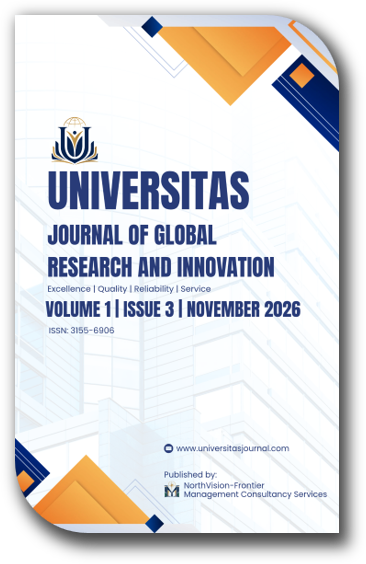
The Challenges and Strategies in Implementing the Revised K-12 Curriculum
DOI:
https://doi.org/10.5281/zenodo.24300758Keywords:
Adaptive Strategies, Curriculum Implementation, Grade 8 Social Science Teachers, Revised K–12 Curriculum, Teacher Readiness, Learning ResourcesAbstract
The implementation of the Revised K–12 Curriculum presents challenges for Social Science teachers as they adjust to changes in learning competencies, teaching approaches, assessment strategies, instructional resources, and learner needs. Despite the intended simplification and improvement of the curriculum, there remains a need to understand how Grade 8 Social Science teachers experience the transition and how they adapt their teaching practices within the local context. This study aims to examine the challenges encountered by Grade 8 Social Science teachers in implementing the Revised K–12 Curriculum in the Schools Division of Calapan City, Oriental Mindoro; identify the adaptive strategies they employ; examine their educational background and training; and determine how these factors influence curriculum implementation. The study will employ a qualitative research design using purposive sampling to select at least five permanent Grade 8 Social Science teachers with relevant teaching experience prior to the curriculum transition. Data will be gathered through semi-structured, in-depth interviews conducted either face-to-face or online and will be analyzed using thematic analysis based on Braun and Clarke’s approach. As part of the continuous improvement of the educational system, the curriculum undergoes revisions to respond to the changing need of society and the demands of the 21st century. The revised K–12 curriculum introduces updates in learning competencies, teaching approaches, and assessment strategies. In particular, the Social Science subject in Grade 8 plays an important role in helping students understand historical events, cultural diversity, civic responsibility, and global issues. The study is expected to provide an understanding of teachers’ experiences, challenges, and adaptive strategies during the curriculum transition and serve as a basis for a proposed support program and mechanisms to enhance Social Science teaching. The findings may contribute to strengthening teacher preparedness, instructional support, professional development, and curriculum implementation in the local context.
Downloads
References
Aytaç, A. (2023). A study on teachers’ perceptions of curriculum changes: Resistance to implementation. International Journal of Innovative Approaches in Education, 7(1), 28–41. https://doi.org/10.29329/ijiape.2023.540.3
Barton, K. C., & Levstik, L. S. (2020). Teaching history for the common good (2nd ed.). Routledge. https://doi.org/10.4324/9780429429758
Bautista, R., & Ocampo, J. (2022). Pedagogical challenges faced by Social Studies teachers in implementing new curriculum standards. Journal of Social Science Education Research, 12(1), 55–72.
Cabansag, M. G. (2020). The K–12 curriculum in the Philippines: An assessment. Journal of Education and Learning, 14(2), 203–210.
Cabaya, J. D., Gerios, C. Q., Lano, J. B., Valenzuela, E. B., & Sumayo, G. S. (2025). From K–12 to MATATAG: A systematic review of the factors driving curriculum transition.
Cabrera, L., & Matic, R. (2020). ICT competencies of public-school teachers in the new normal. Asia Pacific Journal of Educational Technology, 5(3), 14–28.
Capisnon, C. B., & Suan-Timosa, E. (2025). MATATAG ka ba?: Isang fenomenolohikal na pag-aaral sa hamon ng mga pampublikong guro sa makabagong kurikulum. American Journal of Humanities and Social Sciences Research, 9(6), 372–387. https://www.ajhssr.com/wp-content/uploads/2025/06/ZI25906372387.pdf
Caspe, G. M. F., & Sarrosa, A. Jr. V. (2025). Teacher readiness for the implementation of the Enhanced K-10 curriculum: Basis for support mechanism program.
Chavez, M. A. (2021). Implementation issues of the K–12 curriculum in public secondary schools. International Journal of Learning, Teaching and Educational Research, 20(9), 45–60.
Darling-Hammond, L., & Rothman, R. (2021). Teaching in the flat world: Learning from high-performing systems. Teachers College Press.
Darling-Hammond, L., Flook, L., Cook-Harvey, C., Barron, B., & Osher, D. (2020). Implications for educational practice of the science of learning and development. Applied Developmental Science, 24(2), 97–140. https://doi.org/10.1080/10888691.2018.1537791
Dayagbil, F. T., & Alda, R. P. (2024). Continuing professional development opportunities: Teachers’ motivation and perceived effectiveness. Journal of Education and Learning, 18(1), 45–56. https://archive.conscientiabeam.com/index.php/61/article/view/3733
De Guzman, A. (2021). Availability of instructional materials in Araling Panlipunan during curriculum shifts. Philippine Social Studies Review, 17(1), 88–103.
Dela Cruz, M. P., & Mercado, R. S. (2021). Teacher preparedness in implementing curriculum reforms: Challenges and implications for professional development. Philippine Journal of Education Studies, 45(2), 112–125.
Dela Cruz, M. P., & Mercado, R. S. (2021). Teacher preparedness in implementing curriculum reforms: Challenges and implications for professional development. Philippine Journal of Education Studies, 45(2), 112–125.
Demalata, J., & Espacio, N. (2025). Navigating the shift: Social Studies teachers’ early experiences in transitioning from K–12 to MATATAG curriculum. Psychology and Education: A Multidisciplinary Journal, 39(9), 1173–1195. https://doi.org/107588.70838/pemj.390904
Dimaunahan, K. (2022). Assessment practices of Social Studies teachers in the post-K–12 curriculum. Journal of Educational Measurement Philippines, 5(2), 61–77.
Estrella, C. (2021). Non-teaching tasks and teacher performance: A qualitative analysis. Asian Education Studies, 5(3), 55–67.
Evangelista, P. (2024). Teaching controversial issues in Social Studies: Teacher preparedness and confidence. Asia Pacific Social Studies Journal, 4(1), 23–41.
Evangelyn, G. B., Garcia, R. T. D., Tardio, A. F. R., Sintos, K. S., & Lazaro, B. L. G. (2024). A new era of learning: The MATATAG Curriculum and its impact on fourth grade students’ academic performance. International Journal of Advanced Multidisciplinary Research and Studies, 4(6). https://www.multiresearchjournal.com/arclist/list-2024.4.6/id-3565
Fitri, Y., Waluyo, L., & Aisyah, I. S. (2025). Transforming teachers’ roles in navigating the challenges of implementing the Independent Curriculum: Adaptive strategies and professional reflection in elementary school. Journal Evaluation in Education, 6(3). https://cahaya-ic.com/index.php/JEE/article/view/1866
Garcia, M., & Robles, A. (2021). Teachers’ workload and performance in curriculum transition. International Journal of Educational Policy Studies, 9(4), 70–85.
Hernando-Malipot, M. (2023, May 17). Understanding DepEd’s MATATAG K to 10 curriculum. Manila Bulletin. https://mb.com.ph
Lopez, C., & Medina, R. (2023). Teacher perceptions on curriculum reforms: A qualitative study. Philippine Journal of Curriculum Development, 6(2), 33–50.
Loza, J. F. (2024). How can teachers embrace curriculum change: Perceptions on the implementation of MATATAG Curriculum. Philippine Normal University Research. https://www.researchgate.net/publication/383460977
Martinez, V., & Silva, P. (2021). Barriers to implementing inquiry-based learning in Social Studies. Journal of Humanities and Education, 13(3), 119–134.
Morales, D. (2023). Instructional material development for contextualized Social Studies. Education Innovations Review, 11(1), 98–112.
Pacatang, R., & Gallardo, ___. (2025). Teacher experiences, challenges, and support needs in the Philippine MATATAG Curriculum. Philippine MATATAG Curriculum: Teacher Experiences & Challenges in Implementation.
Santos, G., & Francisco, L. (2022). Higher-order thinking skills challenges in Araling Panlipunan classrooms. Philippine Journal of Basic Education, 10(2), 40–58.
Santos, M., & Peña, R. (2020). Pressures and challenges faced by teachers in implementing new curricula. Asia Pacific Journal of Education, 40(1), 62–78.
Santos, M., & Peña, R. (2020). Pressures and challenges faced by teachers in implementing new curricula. Asia Pacific Journal of Education, 40(1), 62–78.
Sari, M., Marwiyah, S., & Masruddin, M. (2025). Teacher strategies in navigating curriculum transition: From K13 to the Merdeka curriculum in primary schools. International Journal of Asian Education, 6(1), 152–159.
Sarmiento, J. F. (2025). Reform again: Comparing the key features of K–12 and MATATAG curriculum. DepEd Bataan Publications. https://depedbataan.com
Sarmiento, J. F. (2025). Reform again: Comparing the key features of K–12 and MATATAG curriculum. DepEd Bataan Publications. https://depedbataan.com
Thornton, S. J. (2022). Curriculum, instruction, and assessment in Social Studies education. Handbook of Social Studies Research, 2, 63–78. https://doi.org/10.4324/9780429434080
Torres, J. (2021). Designing performance tasks in Social Studies under revised competencies.
Downloads
Published
Issue
Section
License
Copyright (c) 2026 Charmaine R. Mascariñas (Author)

This work is licensed under a Creative Commons Attribution 4.0 International License.